Guides
Why Is My Swedish Dishcloth Stiff? (It Is a Good Sign)
September 20, 2026

A Swedish dishcloth that dries stiff as cardboard is working exactly as designed. Run it under the tap for three seconds and it turns soft again. If it stays crunchy when wet, that is a different problem with an easy fix, covered below.
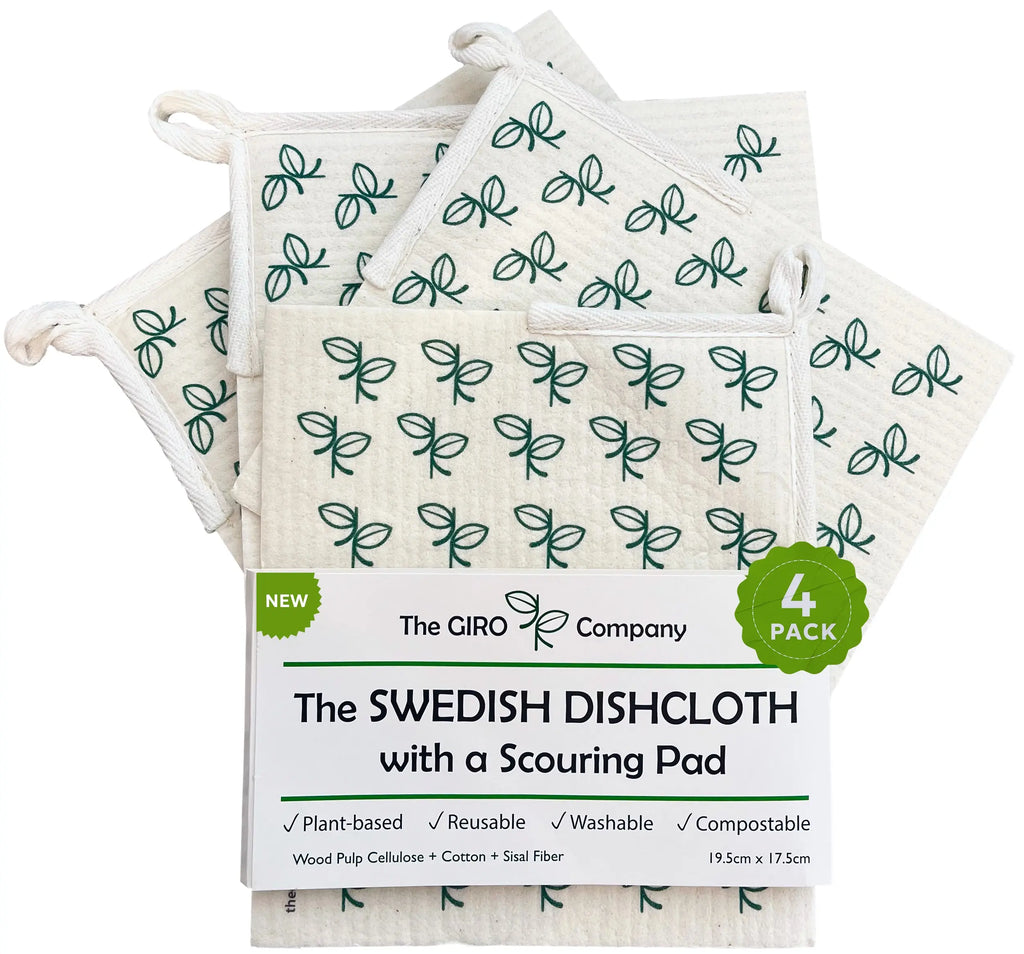
Short answer: stiff when dry = fresh and ready. Giro cloths are 70% cellulose (plant-based wood pulp) and 30% cotton, about 8" × 7", with a sisal scouring corner. Hang dry between uses (skip fabric softener), and expect roughly 2–3 months of regular kitchen life.
Why it goes hard when it dries
The cloth is 70% cellulose (plant-based wood pulp) and 30% cotton. Cellulose fibers swell and slide when they are wet, which is what makes the cloth soft and thirsty. As the water leaves, the fibers lock against each other and the sheet sets flat and rigid. A kitchen sponge never does this because it never fully dries.
That is the whole point. Bacteria and the sour smell that comes with them need moisture. A sponge sits damp for days. A thin cloth hung by its loop is usually bone dry within a few hours, and a dry cloth is a boring place for anything to grow. Stiff means dry. Dry means fresh.
The right way to wake it up
- Wet it first. Hold it under running water until it goes limp.
- Squeeze, do not twist. Press the water out in your fist. Wringing a cloth like a towel strains the fibers, and doing that while it is still half dry can crack it.
- Never fold or bend it dry. If you need to move a dry cloth, move it flat.
When stiff is NOT normal
If the cloth still feels rough, waxy or crunchy after it is fully wet, something has built up in the fibers. There are three usual suspects.
Hard water minerals. If your kettle gets white scale, your cloth does too. Soak it for 20 minutes in a bowl of one part white vinegar to one part warm water, then rinse well.
Soap residue. Dish soap that is never fully rinsed out dries into the cloth. Rinse until the water runs clear, then squeeze.
Fabric softener. This is the big one. Softener and dryer sheets coat fibers with a waxy film. On a towel that feels nice. On a cellulose cloth it blocks absorbency and leaves it oddly stiff and water-repellent. Wash with regular detergent only—machine wash or dishwasher top rack both work. If the damage is done, two vinegar soaks usually strip it.
Curling edges and warped corners
A cloth that dries draped over a tap takes the shape of the tap. It is cosmetic. Wet it and it flattens. If the curl bothers you, hang it by the loop so it dries straight, or lay it flat on the dish rack.
On a Giro cloth the sisal scouring corner dries a little stiffer than the rest. Sisal is a coarse plant fiber, so that is expected. It softens slightly with water but stays firm enough to scrub, which is its job.
How to tell it is worn out instead
Stiffness is not a sign of age. These are:
- Thin patches you can nearly see through
- Holes or fraying that spread after a wash
- It no longer soaks up a spill in one pass, even after a vinegar soak
- A smell that comes back within a day of washing
With daily use most cloths get there in two to three months. When yours does, you can cut it up and add it to a home compost pile. It is made from biodegradable plant fibers (wood pulp and cotton). Along the way, one cloth can replace up to 15 paper towel rolls and absorb about 15× its weight in liquid.
For a deeper care walkthrough, see how to clean Swedish dishcloths and how to get the smell out of dishcloths.
FAQ
Can I put it in the dryer to keep it soft?
It will come out soft and then stiffen again the first time it air dries. Heat also shortens its life. Air drying is kinder and free.
Is a stiff cloth more hygienic than a soft one?
A dry cloth is, and stiff is simply what dry looks like for cellulose. You still need to wash it. Top rack of the dishwasher or in with a regular laundry load both work—just skip fabric softener.
Mine arrived stiff and flat. Is it old stock?
No. They are packed dry and compressed so they ship flat. The first rinse brings them to life.
Will vinegar damage the cloth or the print?
A short soak in diluted white vinegar is fine. Skip bleach, which weakens the fibers.
Ready for a fresh one? Swedish Dishcloths with Scouring Corner come in 4-pack, 8-pack, and 16-pack sizes (sale prices from $11.96) with free US shipping. Questions: help@thegirocompany.com.