Guides
Why Does My Swedish Dishcloth Smell? (And How to Fix It)
September 22, 2026

A Swedish dishcloth that smells usually is not “dirty forever.” It is damp, coated, or overdue for a reset. Fix the cause and the odor goes away. Ignore it and the cloth will keep reminding you every time you pick it up.
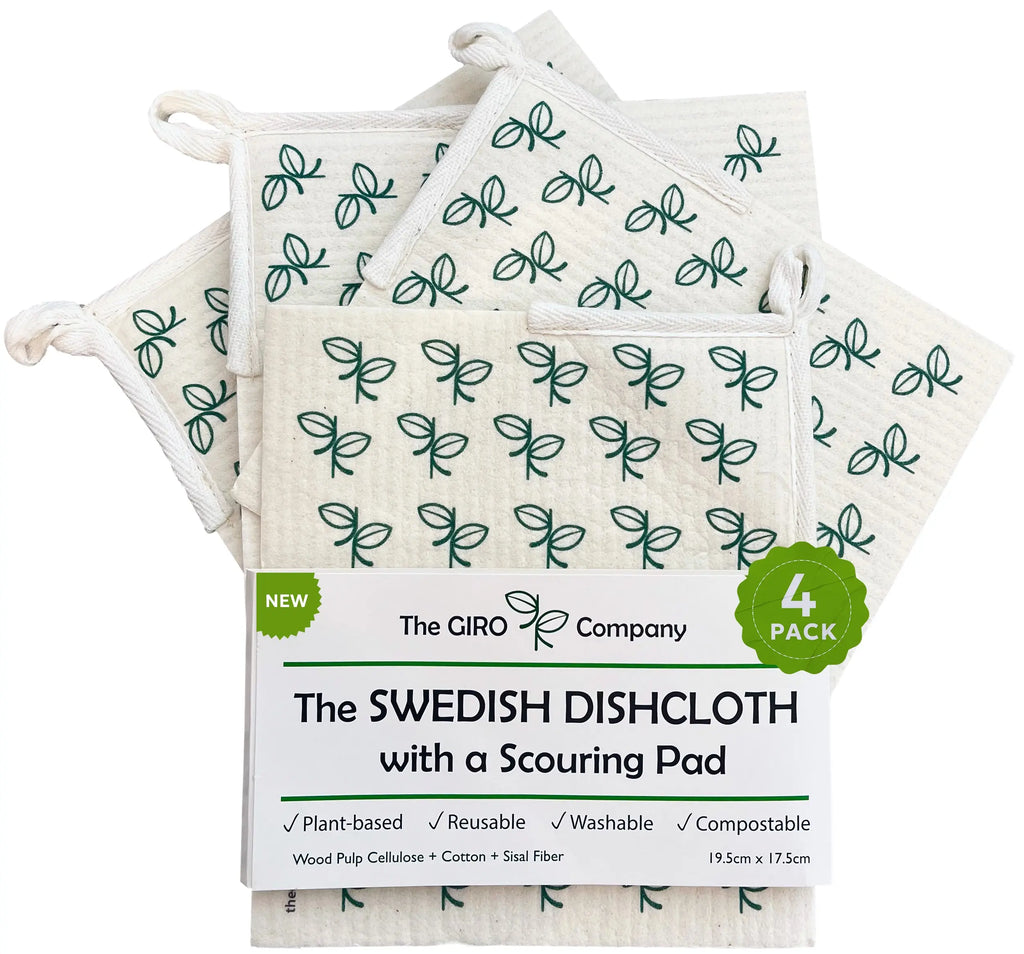
Short answer: rinse after use, hang dry open by the loop, never store it wet in a sealed bag, skip fabric softener, and rescue funk with a white vinegar soak or a dishwasher top rack cycle. Giro cloths are 70% cellulose (plant-based wood pulp) and 30% cotton with a sisal scouring corner. With daily use they typically last about 2–3 months.
Why Swedish dishcloths smell
Odor needs moisture plus leftover food or soap film. A thin dishcloth dries fast when it hangs open. It turns sour when it stays wet in a pile. The usual culprits:
- Left damp in a ball after washing dishes or wiping a counter
- Sealed in a bag or jar “to soak” or for travel—steam with nowhere to go
- Fabric softener or dryer sheets that leave a waxy coat; the cloth feels slick and traps smells instead of absorbing
- Oily or protein messes (raw meat, eggs, butter) left in the fibers overnight
- A cloth past its life—worn fibers hold odor even after a good wash
Swedish dishcloths are not sponges that live in a puddle. Treat them like a quick tool: use, rinse, hang. That habit alone prevents most smell complaints. For the full rinse-and-wash routine, see how to wash a Swedish dishcloth.
Fix it today: rinse, vinegar, hang
If the cloth already smells, do this before you throw it away:
- Rinse under warm water until the runoff runs clear. Rub the diamond texture with your fingers so crumbs leave the fibers.
- Soak 15–20 minutes in equal parts white vinegar and warm water. Vinegar cuts odor and soap film without the harshness of daily bleach.
- Rinse again, squeeze gently (do not twist-wring a half-dry sheet), and hang by the loop so both sides get air.
By the next morning it should smell like nothing. If it still smells sour within a few hours of drying, wash it harder (next section) or retire it.
Dishwasher top rack and laundry reset
When a vinegar soak is not enough, put the cloth on the dishwasher top rack with your next load. Use your normal detergent. Keep it off the bottom heating element so it does not scorch.
Pull it out when the cycle ends and hang it. Leaving it shut inside a steamy machine overnight recreates the damp problem you just fixed.
You can also toss it in a regular laundry load with warm or cool water and regular detergent. No fabric softener and no dryer sheets. Softener is a common reason a cloth “never smells clean” again—it coats cellulose so liquids and odors stick oddly. Air dry after; skip the dryer. If softener already happened, the vinegar soak above usually strips the film. A stiff dry feel after hanging is normal—see why Swedish dishcloths go stiff.
Prevention that actually works
Smell is easier to stop than to chase:
- Rinse and hang every use—loop up, cloth open, not crumpled in the sink
- Never store it wet in a sealed bag, jar, or wet drawer
- Rotate two cloths if you can; one works while the other finishes drying
- Wash sooner after raw meat, eggs, or heavy grease
- Skip fabric softener forever on these cloths
A dry Giro cloth should smell like nothing. If it smells “clean product” from softener perfume, that is coating, not freshness—strip it with vinegar and go back to plain detergent.
When to replace it (and what “2–3 months” means)
With daily kitchen use, plan on roughly 2–3 months. Replace sooner if:
- Odor returns within a day of washing and hanging
- Dark fuzzy spots will not lift with scrubbing
- Thin patches, holes, or fraying that grow after washes
- Absorbency that never comes back after a vinegar soak
Retiring a worn cloth is normal care, not failure. When it’s worn out, you can cut it up and add it to a home compost pile—Giro cloths are plastic-free and made from biodegradable plant fibers. Along the way, one cloth absorbs about 15× its weight in liquid and can replace up to 15 paper towel rolls. More on lifespan: how long Swedish dishcloths last. End of life: are Swedish dishcloths compostable.
What about the sisal scouring corner?
Wash the sisal scouring corner with the rest of the cloth—dishwasher top rack and laundry are both fine. Hang so the corner gets air too. Sisal is a plant fiber; it dries a little firmer than the cellulose-cotton face, which is expected. Do not treat the corner like a separate sponge pad that lives wet in the sink.
Quick smell checklist
- Fresh cloth: rinse → squeeze → hang open
- Mild odor: vinegar soak → rinse → hang
- Stubborn odor: dishwasher top rack or laundry (no softener) → hang
- Odor back in a day / visible mold: replace
- Questions: help@thegirocompany.com
FAQ
Is a smelly Swedish dishcloth unsafe?
Treat smell as a signal to wash or replace. Do not keep using a cloth with fuzzy mold you cannot scrub off. A clean, fully dry cloth is the goal for everyday counters and dishes.
Can I use bleach every time?
Occasional diluted bleach is a last resort for some kitchens, but it weakens fibers. Prefer vinegar soaks and regular detergent. Retire thin cloths instead of bleaching them into shreds.
Why does it smell after the dishwasher?
It probably sat damp inside the closed machine. Hang it as soon as the cycle ends. If softener is in your dishwasher rinse aid habit for other items, keep the cloth on a plain detergent cycle when you can.
Does hanging make it stiff?
Yes, and that is normal. Stiffness means it dried. Soften it under the tap when you start the next job. Stiff is not the same as smelly.
Ready for a fresh pack? Swedish Dishcloths with a sisal scouring corner ship free in the USA in 4-pack, 8-pack, and 16-pack sizes. Questions anytime: help@thegirocompany.com.