Guides
Swedish Dishcloth vs Paper Towels: Which Saves More?
September 15, 2026

Paper towels are the default for kitchen spills: grab, wipe, toss. That habit is fast—and it adds up in cost, trash bags, and closet space. A Swedish dishcloth is the reusable opposite: wet it, wipe the spill, rinse, hang it, and use it again tomorrow.
So which actually saves more—Swedish dishcloths or paper towels? Below is a direct comparison on absorbency, cost, waste, and scrubbing, with Giro’s built-in sisal scouring corner called out where it changes the day-to-day routine.
Quick answer: Swedish dishcloth vs paper towels
If you want the lowest ongoing cost and the least kitchen trash for everyday spills and wipe-downs, a reusable Swedish dishcloth usually wins. Paper towels still win on one-and-done convenience for greasy messes you would rather not wring out—but most kitchen spills do not need a disposable sheet.
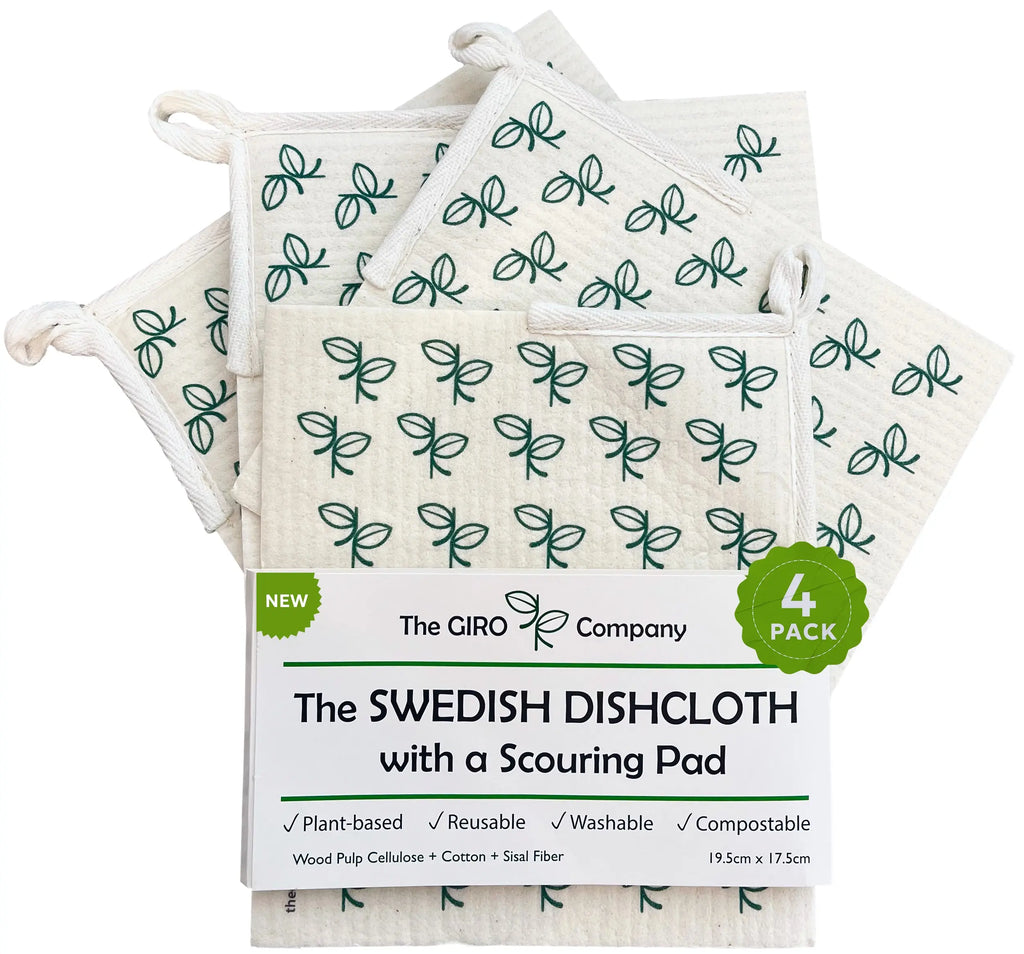
Giro’s Swedish dishcloths are about 8" × 7", made from 70% cotton / 30% FSC wood pulp cellulose, absorb about 15× their weight, and last roughly 2–3 months with regular use. One cloth replaces up to 15 paper-towel rolls. Each cloth also has a patent-pending sisal scouring corner, so light scrubbing lives on the same hang-dry tool.
Absorbency: how they handle kitchen spills
Paper towels soak until the sheet is saturated, then you grab another. On a tipped drink or a wet counter, that often means a wad of sheets for one mess.
A Giro Swedish dishcloth soaks up about 15× its weight. Wet it first (dry cellulose cloths work better once damp), wipe, wring into the sink, and keep going. For many everyday spills—coffee, sauce drips, rinsed produce—you finish with one cloth instead of a growing pile of wet paper.
That “grab and soak” feel is why Swedish dishcloths are such a natural paper-towel swap. They are built for liquid, not just light dusting.
Cost: rolls on autopilot vs one reusable cloth
Paper towels look cheap per roll until you notice how often the pack empties. A household that goes through a roll every week or two is quietly buying paper all year—plus the storage space those jumbo packs take.
One Giro cloth replaces up to 15 paper-towel rolls over its life. A 4-pack is roughly 60 rolls you do not buy or restock. Packs also come in 8 and 16 if you want extras for the bathroom, garage, or guests.
You still might keep a small paper-towel stash for rare messes. The savings show up when the Swedish dishcloth becomes the default for counters, dishes, and everyday spills—so the roll sits unused for weeks instead of days.
Waste: trash bag vs hang-dry loop
Every paper-towel wipe becomes trash (or recycling wishful thinking—used paper towels are rarely recyclable once wet and soiled). Over months, that is a lot of volume in the bin for seconds of use.
A Swedish dishcloth stays in rotation: rinse, hang dry on its loop, reuse. Giro cloths are plastic-free, biodegradable, and compostable when worn out, and they are claimed under OEKO-TEX Standard 100. After about 2–3 months of regular kitchen use, start a fresh cloth and compost the old one.
Less paper in the trash also means fewer bulky packages under the sink and fewer last-minute store runs when the roll runs out mid-spill.
Scrubbing: Giro’s sisal scouring corner
Plain paper towels wipe; they do not scrub stuck-on food. You end up reaching for a separate sponge or scrubber—or burning through more sheets while rubbing.
Giro builds scrubbing into the same cloth with a patent-pending sisal scouring corner—sisal fiber worked into one corner, not a separate tool. Use the soft cotton-cellulose surface for spills, counters, and dishes. Flip to the sisal corner for stuck bits on pans, baking sheets, or the stovetop.
That is the Giro-specific difference in this comparison: paper towels are single-use wipes; a Giro Swedish dishcloth is wipe + light scrub + rinse + hang, without adding another item to the sink.
Care (so the cloth keeps absorbing)
- Rinse after use and hang dry—skip the damp ball under the sink.
- Machine wash or place on the dishwasher top rack when you want a deeper clean.
- No fabric softener—it coats fibers and reduces absorbency.
- Expect about 2–3 months with regular use; replace when it thins or stops soaking well.
Thin cloths that hang flat usually dry faster than a thick wet sponge, which helps kitchens smell fresher between washes.
Side-by-side comparison
| Feature | Giro Swedish dishcloth | Paper towels |
|---|---|---|
| Size / format | ~8" × 7" reusable cloth | Disposable sheets from a roll |
| Materials | 70% cotton / 30% FSC wood pulp cellulose | Typically wood pulp paper |
| Absorbency | About 15× its weight; wring and reuse | One sheet, then toss when soaked |
| Scrubbing | Sisal scouring corner on the same cloth | Wipe only; needs a separate scrubber |
| Cost over time | 1 cloth ≈ up to 15 rolls | Ongoing repurchase of rolls |
| Waste | Reuse for months; compost when done | Trash after each use |
| Care | Machine wash / dishwasher top rack; hang dry; no softener | None—buy more when empty |
| Lifespan | ~2–3 months with regular use | Single use per sheet |
| Certifications | OEKO-TEX Standard 100 | Varies by brand |
FAQ
Do Swedish dishcloths really replace paper towels?
For everyday kitchen spills, counters, and dishes—yes, that is the main use case. One Giro cloth replaces up to 15 paper-towel rolls. You may still want paper towels for a few one-and-done messes; the goal is to stop using a full roll for routine wipe-downs.
Which saves more money: Swedish dishcloths or paper towels?
Reusable cloths usually cost less over a few months because you are not restocking rolls on a schedule. Factor in how many rolls your household burns through; swapping the daily habit to a Swedish dishcloth is where the savings show up.
Will a Swedish dishcloth handle stuck-on food like paper towels cannot?
Paper towels are wipes, not scrubbers. Giro’s sisal scouring corner handles light scrubbing on the same cloth—soft side for spills, sisal corner for stuck bits—so you are not shredding disposable sheets on a pan.
How do I care for a Giro Swedish dishcloth?
Rinse, hang dry, and skip fabric softener. Machine-wash or use the dishwasher top rack when needed. With regular use, plan on about 2–3 months per cloth.
The bottom line
Paper towels win on pure disposability. A Swedish dishcloth wins on absorbency per wipe, long-term cost, and trash volume—especially when one cloth replaces up to 15 rolls and lasts 2–3 months. Giro adds a sisal scouring corner so scrubbing does not send you back to a sponge or another roll.
Ready to cut the paper-towel habit? Shop Giro Swedish dishcloths—4, 8, and 16 packs—with free US shipping from San Mateo, California.
Shop Swedish Dishcloths with Scouring Corner
Still deciding? Browse our FAQs or shop Swedish dishcloths.
Questions? Email help@thegirocompany.com.