Guides
Swedish Dishcloth vs Microfiber: Which Should You Use?
September 11, 2026

Microfiber cloths are everywhere—cars, glass, kitchen counters. Swedish dishcloths are thinner, soak up more, and (with the right design) scrub stuck-on food too. So which should you reach for on a normal weeknight: a Swedish dishcloth or a microfiber cloth?
Short answer: they overlap, but they are not the same tool. Below is a practical side-by-side for absorbency, scrubbing, drying, waste, and everyday kitchen jobs—plus where Giro’s sisal scouring corner fits.
Quick answer: Swedish dishcloth vs microfiber
Use a Swedish dishcloth when you want one cloth for spills, dishes, counters, and light scrubbing, with less paper-towel waste. Use microfiber when you care most about polishing glass, screens, or dusting dry surfaces with almost no lint.
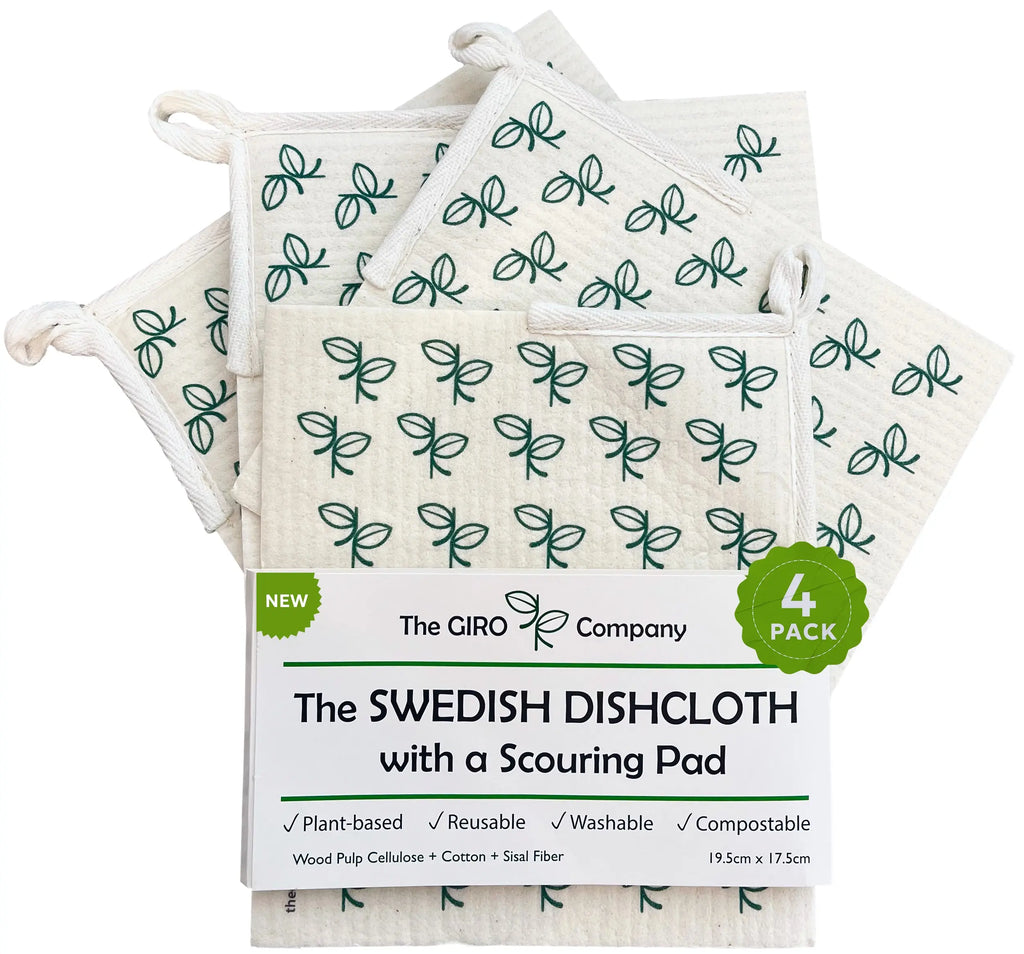
Giro’s Swedish dishcloths are about 8" x 7", made from 70% cotton and 30% FSC wood pulp cellulose, absorb about 15x their weight, and include a patent-pending sisal scouring corner on the same cloth—so wipe and scrub stay in one hang-dry tool.
What each cloth is made for
Swedish dishcloth
A Swedish dishcloth is a thin, plant-based cleaning cloth. Wet it and it turns soft and highly absorbent. Hang it and it stiffens a bit as it dries, which helps it air out between uses.
One Giro cloth can replace up to 15 rolls of paper towels. Expect about 2–3 months of regular kitchen use with normal care, then compost it when it is worn out.
Microfiber cloth
Microfiber is usually polyester and polyamide (plastic-based) woven into ultra-fine filaments. Those filaments grab dust and leave glass looking streak-free, which is why microfiber dominates car detailing and screen cleaning.
Many microfiber cloths are washable and long-lasting, but they are not biodegradable the way a cotton-cellulose Swedish dishcloth is. When they wear out, they typically go to the trash—not the compost bin.
Absorbency and spills
This is where Swedish dishcloths usually win in the kitchen. Giro cloths soak up about 15x their weight, so a tipped glass or a wet counter is often one wipe—not a stack of paper towels or a barely-damp microfiber square.
Microfiber can wipe spills, but many cloths are built more for polishing than for drinking large volumes of liquid. If your main frustration is “I keep buying paper towels for kitchen messes,” a Swedish dishcloth is the closer swap.
Scrubbing: sisal corner vs smooth microfiber
Plain microfiber is soft. That is great for stainless steel finishes and glass, and less great when pasta sauce is baked onto a pan.
Giro solves that without a second tool: each cloth has a patent-pending sisal scouring corner—sisal fiber worked into one corner, not a separate scouring layer glued across a whole face. Use the soft cotton-cellulose area for counters, dishes, and glass. Flip to the sisal corner for stuck bits on cookware or the stovetop.
You can still keep a microfiber cloth for mirrors and screens. For sink-side scrubbing plus spills, the Swedish dishcloth with a scouring corner covers more of the day.
Drying, smell, and care
- Swedish dishcloth: Rinse, hang dry, skip fabric softener (it coats fibers and hurts absorbency). For a deeper clean, machine-wash or place it on the dishwasher top rack.
- Microfiber: Usually machine-washable, but softener and dryer sheets can clog the filaments. Many people keep a separate laundry load so oil and lint do not reduce that “grab.”
Because Giro cloths are thin and hang flat, they often dry faster than a thick wet sponge—and that faster dry time is what helps kitchens smell cleaner between washes.
Waste and end of life
Giro cloths are plastic-free, biodegradable, and compostable when worn out. They are also claimed under OEKO-TEX Standard 100. Microfiber’s strength—durable synthetic filaments—also means it does not break down like plant fiber.
If your goal is fewer paper-towel rolls and less plastic cleaning gear heading to landfill, a small stack of Swedish dishcloths is the clearer sustainability trade.
Side-by-side comparison
| Feature | Giro Swedish dishcloth | Typical microfiber cloth |
|---|---|---|
| Size / feel | ~8" x 7", flat, flexible when wet | Often square; soft, dense weave |
| Materials | 70% cotton, 30% FSC wood pulp cellulose | Usually polyester + polyamide |
| Absorbency | About 15x its weight | Good for wiping; less “spill sponge” |
| Scrubbing | Sisal scouring corner on the same cloth | Generally smooth; not a scrubber |
| Best jobs | Spills, dishes, counters, light scrubbing | Glass, screens, dusting, polishing |
| Care | Machine wash / dishwasher top rack; hang dry; no softener | Wash separately; avoid softener |
| Lifespan | ~2–3 months with regular kitchen use | Often longer; varies by quality |
| End of life | Biodegradable / compostable | Usually landfill (plastic fiber) |
| Paper towel swap | 1 cloth ≈ up to 15 rolls | Not designed as a paper-towel replacement |
When to use both
You do not have to pick only one forever. A simple setup that works in many homes:
- Swedish dishcloths by the sink for spills, dishes, stovetop, and counters.
- One microfiber cloth in a drawer for mirrors, glass doors, and screens.
That split cuts paper-towel habit without forcing a soft polishing cloth to scrub pans.
FAQ
Is a Swedish dishcloth the same as a microfiber cloth?
No. Swedish dishcloths are plant-fiber (cotton + cellulose). Microfiber is synthetic. They feel different wet, dry differently, and end life differently.
Can microfiber replace paper towels?
Sometimes for light wipe-downs, but most people still reach for paper towels on big kitchen spills. A Swedish dishcloth is closer to that “grab and soak” habit.
Will the sisal scouring corner scratch surfaces?
Use the soft side for delicate finishes and glass. Save the sisal corner for stuck-on food on cookware and tougher kitchen jobs—the same way you would choose a scrubber intentionally, not on every wipe.
How long does a Giro Swedish dishcloth last?
About 2–3 months with regular use if you rinse, hang dry, and wash as needed. When it thins out or stops absorbing well, compost it and start a fresh cloth.
The bottom line
Choose microfiber when polishing and dust-grabbing matter most. Choose a Swedish dishcloth when you want absorbency, less paper-towel waste, and (with Giro) a built-in sisal scouring corner for stuck-on messes—all on one hang-dry cloth.
Ready to try the sink-side setup? Shop Giro Swedish dishcloths with a sisal scouring corner—4, 8, and 16 packs—with free US shipping from San Mateo, California.
Shop Swedish Dishcloths with Scouring Corner
Questions? Email help@thegirocompany.com.