Guides
Swedish Dishcloth vs Cotton Dish Towel: Which Belongs in Your Kitchen?
September 15, 2026

Cotton dish towels are a kitchen classic: soft, familiar, and always hanging near the sink. Swedish dishcloths look different—thinner, more sponge-like when wet—and they are built for a different job: soaking spills, wiping counters, and light scrubbing without a pile of laundry.
So which belongs in your kitchen day to day—a Swedish dishcloth or a cotton dish towel? Below is a practical comparison on absorbency, drying time, odor, scrubbing, and laundry load, with Giro’s built-in sisal scouring corner called out where it changes the routine.
Quick answer: Swedish dishcloth vs cotton dish towel
Use a Swedish dishcloth for spills, counters, stove wipe-downs, and dishes that need a quick scrub. Keep a cotton dish towel for drying hands and drying clean dishes. They complement each other; they are not the same tool.
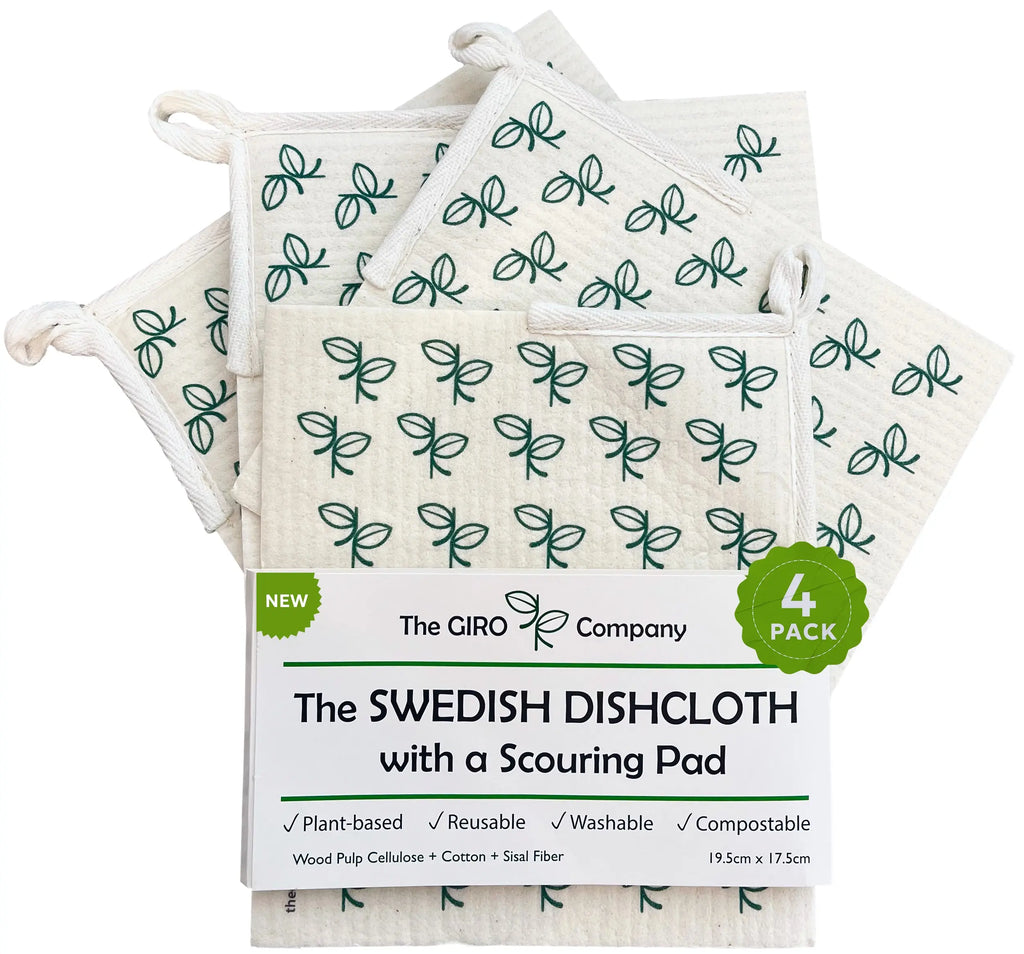
Giro’s Swedish dishcloths are about 8" × 7", made from 70% cotton / 30% FSC wood pulp cellulose, absorb about 15× their weight, and last roughly 2–3 months with regular use. One cloth replaces up to 15 paper-towel rolls. Each cloth also has a patent-pending sisal scouring corner for stuck-on food—without swapping to a separate sponge.
Absorbency: spills vs polish-drying
Cotton towels are great at blotting and at drying what is already clean. For a tipped drink or a wet cutting board, they often feel saturated fast, and you may reach for a second towel—or a paper towel—before the mess is gone.
A Giro Swedish dishcloth soaks up about 15× its weight. Wet it first (dry cellulose cloths work better once damp), wipe, wring into the sink, and keep going. That soak-and-wring loop is why Swedish dishcloths feel closer to a reusable paper towel than to a fluffy terry towel.
Drying time and kitchen smell
Thick cotton towels stay damp longer when they live on a hook by the sink. Damp fabric is where kitchen odors start—especially after wiping raw produce juice or dinner dishes.
Swedish dishcloths are thinner and hang-dry quickly between uses. Rinse, wring hard, and hang so air can move through the cloth. That habit keeps the cloth fresher with less laundry than a stack of wet cotton towels.
Scrubbing: where the sisal corner helps
A soft cotton towel is not a scrubber. Burned-on bits on a pan usually send you looking for a sponge, a brush, or another product.
Giro builds a sisal scouring corner into the same cloth. Use the soft cellulose face for everyday wipe-downs and the sisal corner for light scrubbing on dishes and pans. It is a scouring corner, not a separate scouring pad—so one hang-dry tool covers wipe and scrub for many jobs.
Laundry load: wash often vs rinse and hang
Cotton dish towels usually join the laundry every few days (or sooner if they smell). That is fine if you already run frequent loads; it is more work if you hoped to cut disposable paper and did not plan for more laundry.
With a Swedish dishcloth, the daily habit is rinse, wring, hang. Toss it in with a regular wash when it needs a deeper clean, and replace it after about 2–3 months of kitchen use. Over that window, one cloth can stand in for up to 15 rolls of paper towels—while your cotton towels stay focused on drying hands and dishes.
| Job | Swedish dishcloth | Cotton dish towel |
|---|---|---|
| Counter and spill wipe-ups | Best fit | Works, but saturates faster |
| Light scrubbing on dishes | Yes (sisal corner) | No |
| Drying hands / drying dishes | Not the main job | Best fit |
| Quick hang-dry between uses | Yes | Slower when thick and wet |
| Cut paper-towel use | Strong swap | Limited for spills |
How to use both without clutter
Hang one Giro Swedish dishcloth by the sink for spills and wipe-downs. Keep one clean cotton towel for hands and drying. That two-tool setup covers most kitchens without a sponge rotting in a dish and without a roll of paper towels for every drip.
Specs to remember for Giro: about 8" × 7", 70% cotton / 30% FSC cellulose, ~15× absorbency, ~2–3 months of life, and a built-in sisal scouring corner.
Bottom line
A cotton dish towel still earns a hook for drying. For the messy middle of kitchen life—spills, counters, and light scrubbing—a Swedish dishcloth is usually the better everyday tool, especially when one cloth can replace up to 15 rolls of paper towels and includes a sisal corner for stuck-on food.
Ready to try the wipe-and-scrub combo? Shop Giro Swedish dishcloths—4, 8, and 16 packs—with free US shipping from San Mateo, California.
Shop Swedish Dishcloths with Scouring Corner
Questions? Email help@thegirocompany.com.