Guides
How to Dust With a Swedish Dishcloth (No Paper Towels Needed)
October 5, 2026

Yes, a Swedish dishcloth makes a great duster, and it might be the most underrated job in its whole résumé. Used slightly damp, it picks dust up instead of flicking it into the air, it folds into corners a feather duster can't reach, and it rinses clean in seconds. No disposable dusting sheets, no paper towels.
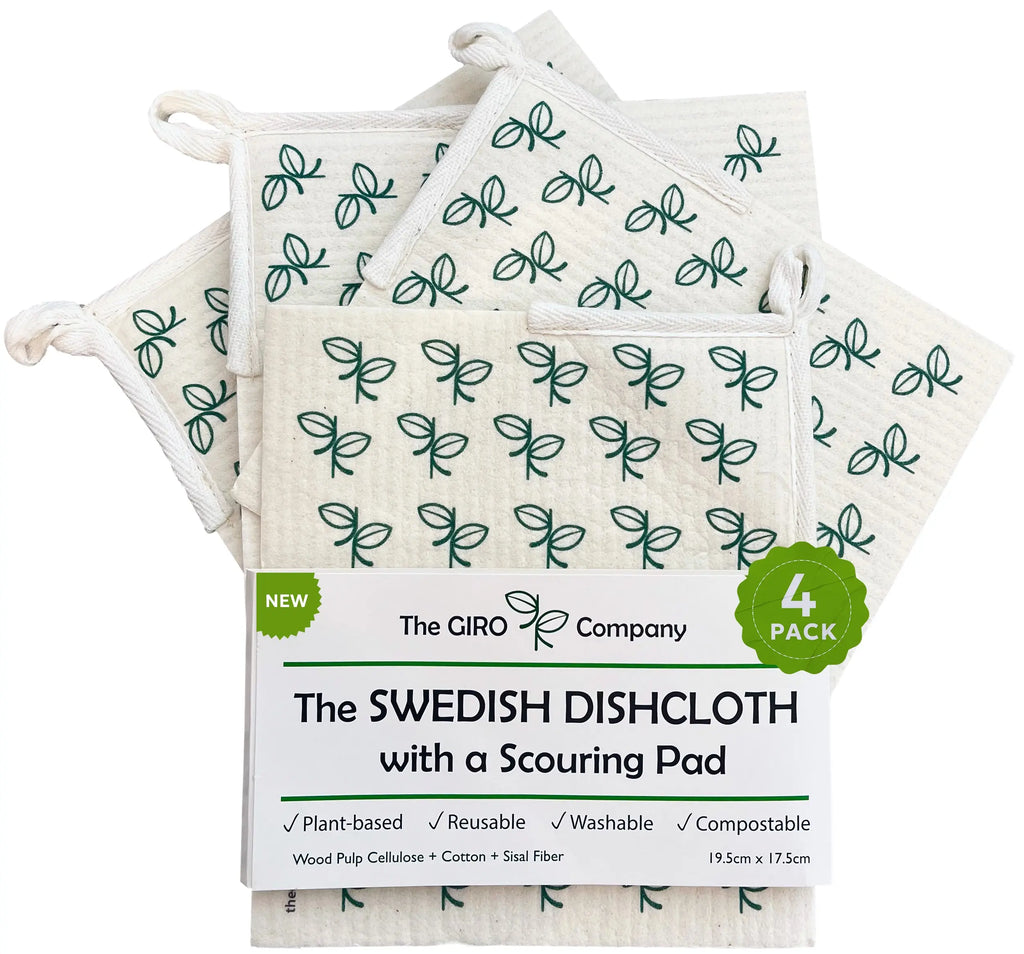
Short answer: rinse the cloth, wring it out until it's barely damp, wipe top to bottom in slow passes, and fold to a fresh side as it loads up. Rinse, then hang dry. Giro cloths are 70% cellulose (plant-based wood pulp) and 30% cotton, absorb up to 15× their weight, and last about 2–3 months with regular use.
Why a damp Swedish dishcloth works for dusting
Dust is light. A dry rag or feather duster often just moves it around, and a good share ends up back on the shelf an hour later. A cloth that is slightly damp gives dust something to stick to, so more of it leaves with the cloth.
A Swedish dishcloth is good at "slightly." Because the cellulose holds water so well, you can wring it hard and it still stays evenly damp across the whole sheet, without dripping or leaving streaky puddles on wood or painted surfaces. It's also thin and flexible, so it wraps around spindles, lamp bases, and leaves in a way a thick towel won't.
How to dust with a Swedish dishcloth
- Wet and wring. Run the cloth under the tap, then wring it out firmly. You want it soft and cool to the touch, not wet. If you can see a damp trail on the surface after a wipe, wring again.
- Work top to bottom. Start with picture frames, shelves, and the tops of door frames, then move to tables and baseboards. Dust falls, so let gravity help you.
- Wipe in slow, overlapping passes. Fast swipes push dust off the edge and onto the floor. Slow passes let the cloth pick it up.
- Fold to a fresh side. Fold the cloth in half, then in quarters. When one face looks gray, flip to a clean one. When all the faces are used, rinse and wring, then keep going.
- Finish with a quick dry pass on wood if needed. On finished wood, a barely damp cloth usually dries on its own in seconds. If you're unsure, follow with a dry cloth.
- Rinse and hang dry. Rinse the dust out until the water runs clear, squeeze gently, and hang the cloth open so it dries fully.
Where it shines around the house
Houseplants. Leafy plants collect a surprising film of dust. Cup a leaf between the cloth and your hand and slide toward the tip. It's gentle, and you can do a whole small tree in a few minutes. Support the stem with your other hand so you don't snap anything.

Shelves, consoles, and side tables. Move the small stuff aside, wipe the surface in long passes, then give each object a quick wipe before it goes back. Candles, vases, and frames all pick up dust faster than you'd think.
Frames, clocks, and wall decor. The thin cloth slips along the top edge of a frame and around the rim of a clock without knocking it crooked. For framed glass, a barely damp cloth works fine. For extra shine, see our guide to cleaning mirrors and glass without streaks.

Baseboards and window sills. These are the dustiest spots in most homes. A damp Swedish dishcloth picks up the fuzz instead of rolling it into little gray balls. For grime that's actually stuck on, a quick rub with the sisal scouring corner on a sturdy painted sill can help. Test a hidden spot first.
Appliances and stainless steel. Fridge tops, toasters, and range hoods collect a mix of dust and grease. A damp cloth handles both. More tips: how to clean stainless steel appliances.
What to skip (or be careful with)
- Screens and electronics. Don't use a damp cloth on TVs, monitors, or laptops, and never on anything that's plugged in. Follow the manufacturer's cleaning guidance.
- Unfinished, waxed, or oiled wood. These surfaces can spot with water. Use a dry cloth or the product the finish calls for.
- The scrubber on delicate finishes. Keep the sisal scouring corner away from glossy lacquer, picture glass, and soft painted finishes. It's made for scrubbing jobs, not dusting.
- A dripping cloth. If it's wet enough to leave a trail, it's too wet for dusting. Wring it again.
- Fabric softener. When you wash your cloths, skip fabric softener. It coats the fibers and makes the cloth less absorbent.

Keep a dusting cloth separate from your kitchen cloth
It's worth giving dusting its own cloth, maybe a different print, so the one you use on dishes and counters stays in the kitchen. Many households rotate a few cloths: one for the sink, one for counters, one for dusting, and one drying. Not sure how many you need? Here's how many Swedish dishcloths to keep on hand. For more ideas, see other uses for Swedish dishcloths.
How to clean your dusting cloth
- After each session: rinse until the water runs clear, squeeze gently, and hang dry open.
- Deeper clean: put it on the dishwasher top rack, or machine wash with similar colors and regular detergent. No fabric softener.
- Dry: hang dry. A stiff, dry cloth is normal, and a quick rinse softens it right back up.
Full care steps: how to wash a Swedish dishcloth.
What Giro cloths are made of
- 70% cellulose (plant-based wood pulp) and 30% cotton
- A sisal scouring corner for stuck-on messes
- About 8×7 in, absorbs up to 15× its weight
- One cloth can replace up to 15 paper towel rolls
- Lasts about 2–3 months with regular use
- Plastic-free and made from biodegradable plant fibers
- Care: rinse and hang dry, dishwasher top rack or machine wash, no fabric softener
When a cloth is finally worn out, you can cut it up and add the pieces to a home compost pile if you compost at home.
FAQ
Can you dust with a Swedish dishcloth?
Yes. Wring it out until it's barely damp, wipe in slow passes, and fold to a fresh side as it picks up dust. Then rinse and hang dry.
Should the cloth be wet or dry for dusting?
Slightly damp works best on most hard surfaces because dust sticks to it. Use it dry on screens, electronics, and unfinished or waxed wood.
Is a Swedish dishcloth better than microfiber for dusting?
Both work. Microfiber is a strong dry duster. A Swedish dishcloth is plant-based and plastic-free, so you skip synthetic fibers. Here's the full Swedish dishcloth vs microfiber comparison.
Can I use the same cloth for dusting and dishes?
You can, but it's nicer to keep a separate dusting cloth so household dust stays out of the kitchen sink.
Questions?
Email us at help@thegirocompany.com. We ship from San Mateo, California.
Ready to retire the disposable dusting sheets? Our Swedish Dishcloths with a sisal scouring corner come in 4 packs ($11.96), 8 packs ($19.98), and 16 packs ($34.96).