Guides
How to Clean an Oven Naturally (Baking Soda, Vinegar & a Swedish Dishcloth)
October 16, 2026

Ovens collect the evidence of every good meal: bubbled-over lasagna, splattered roast drippings, that one pie that ran over the edge. With the holidays coming, now is a smart time to get the oven clean before it gets a workout. You do not need a can of harsh oven cleaner for routine grime. Baking soda, a little white vinegar, and a damp Swedish dishcloth handle most of it. Mostly, it just takes patience.
Short answer: with the oven off and cool, pull the racks, spread a baking soda paste on the dirty spots (skip the heating elements, gas ports, and door gasket), and let it sit overnight. Wipe it out with a damp Swedish dishcloth, use the sisal scouring corner on stubborn baked-on bits, mist any white residue with vinegar, then do a final rinse wipe. One cloth absorbs up to 15× its weight, so it picks up the loosened gunk without a pile of paper towels.
Before you start: check your oven
Ovens are not all built the same, so take two minutes before you grab the baking soda:
- Read the manual (or look up your model). Many ranges have Self Clean and Steam Clean buttons, and some interiors have special coatings. The manufacturer's cleaning instructions win over any general guide, including this one.
- Turn it off and let it cool completely. Never wipe a warm oven. For gas ovens, make sure the burner is off; for electric, turning off the breaker is extra-safe if you're working near the elements.
- Empty it. Take out the racks, the oven thermometer, the pizza stone, and anything stored inside (we all do it).
- Know what not to touch. Keep paste and water off the heating elements, gas burner ports, the fan cover in convection ovens, and the soft fiberglass gasket around the door. Scrubbing the gasket can damage the seal.
What you need
- 1/2 cup baking soda and a few tablespoons of water
- White vinegar in a spray bottle (optional, for leftover residue)
- Two Swedish dishcloths (about 8×7 in each): one for wiping out the paste, one for the final rinse wipe
- A bowl of warm water and a little dish soap
- A plastic scraper or old gift card for thick, carbonized spots
- Gloves if you have sensitive skin
Step-by-step: the overnight baking soda method
- Mix the paste. Stir baking soda with water a little at a time until it is spreadable, like frosting.
- Spread it on. With gloved fingers or the back of a spoon, coat the oven floor, walls, and the inside of the door glass. Go heavier on the brown, crusty spots. Avoid the elements, gas ports, fan, and door gasket.
- Wait. Let it sit 8–12 hours, or overnight. The paste will turn brownish as it softens the grease. This waiting is what saves you the elbow grease.
- Scrape the thick stuff. Use a plastic scraper or old gift card to lift any heavy, carbonized patches. Skip metal tools, since they can scratch enamel.
- Wipe it out. Wet a Swedish dishcloth in warm water, wring it so it is damp (not dripping), and wipe the paste out in sections. Rinse the cloth in your bowl often. Because it is thin and thirsty, it lifts the paste instead of just pushing it around.
- Use the sisal scouring corner on what's left. For stubborn baked-on bits, work the cloth's sisal corner in small circles with light pressure. Test a small, hidden spot first if your oven has a special coating.
- Mist any white film with vinegar. A light spray of white vinegar makes leftover baking soda fizz and loosen. Give it a minute, then wipe.
- Rinse wipe and dry. Switch to your second, clean Swedish dishcloth dipped in plain water. Do one last pass so no residue bakes on next time, then leave the door open for a bit to air out.

How to clean oven racks
Racks are often the grimiest part, and they're easiest to clean outside the oven:
- Lay an old towel in the bathtub (or use a large utility sink) so the racks don't scratch it.
- Fill with enough hot water to cover the racks and add a generous squeeze of dish soap. A sprinkle of baking soda helps too.
- Soak for a few hours or overnight.
- Scrub the bars with the sisal scouring corner, working along each rung. Rinse well and dry completely before sliding them back in.
If your racks are the shiny chrome type, check your manual before running a self-clean cycle with them inside. Many manufacturers say to remove them because the high heat can discolor them or make them hard to slide.
The oven door, handle, and knobs
Inside door glass: Treat it like the oven floor, with paste, a wait, and a wipe. Finish with a well-wrung cloth so the glass dries clear. Some doors come apart for cleaning between the panes, but only if your manual shows how.
Outside door: Stainless doors show every fingerprint. Wipe with a damp cloth and a drop of dish soap, going with the grain, then buff dry. More stainless tips are in how to clean stainless steel appliances.

Handle and control panel: Spray or dampen the cloth, not the controls, so liquid doesn't drip behind buttons or knobs. Wipe around the knobs (many pull straight off for a soak in soapy water), then dry. If your cooktop needs attention too, see how to clean an electric stove top.
Should you use self-clean or steam clean?
Self-clean heats the oven very hot to burn residue down to ash, which you then wipe out. It works, but it can take a few hours, it can create smoke and odor, and it puts a lot of heat stress on the oven. If you use it, follow your manual exactly, remove what it tells you to remove, open a window, and don't run it right before a big cooking day. Wipe out the ash afterward with a damp Swedish dishcloth.
Steam clean (on models that have it) uses a little water and lower heat to loosen light, fresh spills. It's a good in-between option for small messes, followed by a wipe.
For most routine grime, the overnight baking soda method is gentler and doesn't need extra heat. And don't use commercial oven cleaner on a self-cleaning interior unless your manual says it's OK.
Keep it cleaner, longer
- Wipe spills once the oven cools. A fresh spill comes off in seconds with a damp cloth. After a few more bakes, it turns into carbon.
- Use a sheet pan under bubbly dishes. Put it on the rack below casseroles and pies. Skip lining the oven floor with foil unless your manual allows it, since it can block airflow or damage the finish.
- Do a quick monthly wipe. A five-minute pass with a soapy cloth keeps you from needing the full overnight treatment more than a few times a year.
Same cloth, same habit, other appliances: see the easy way to clean a microwave and how to clean a toaster.
Why a Swedish dishcloth works well for oven cleanup
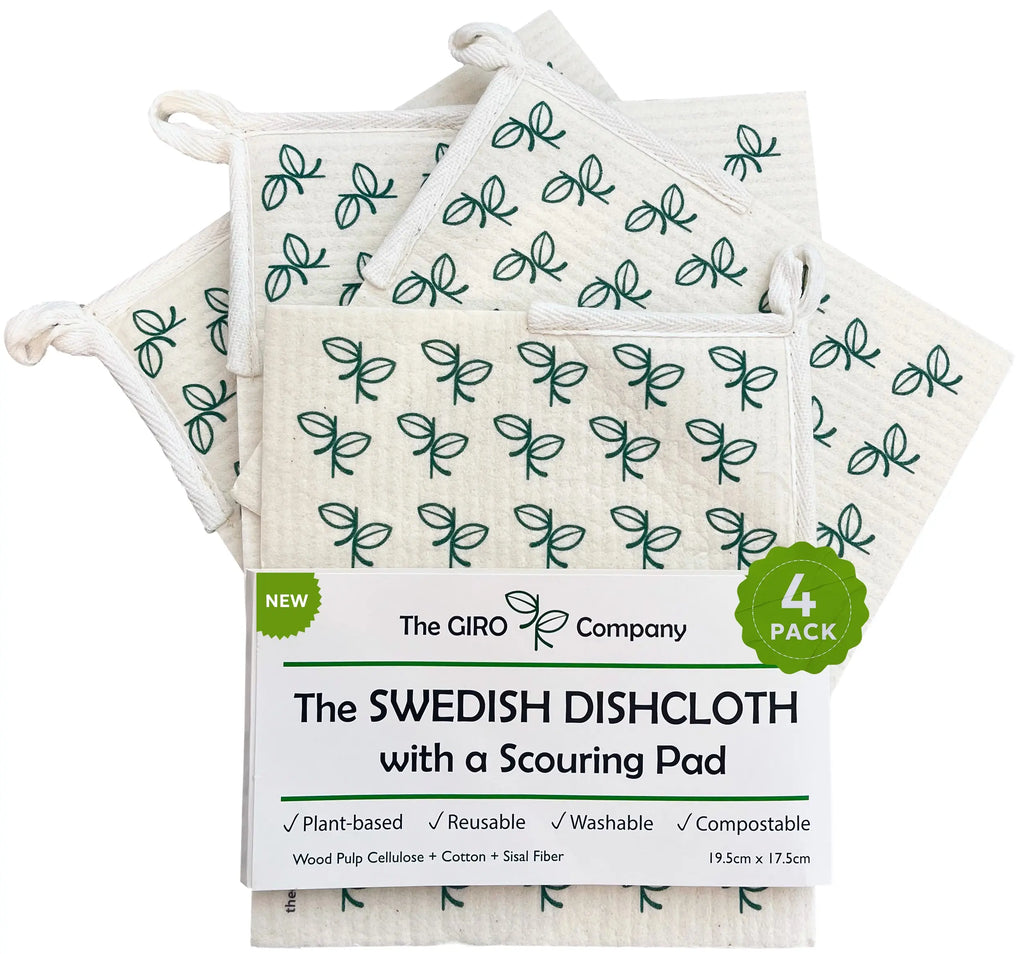
Paper towels shred when you wipe wet baking soda paste, and a thick sponge just smears it around. A Swedish dishcloth is thin, holds a lot of water, and rinses clean in a bowl, so you can wipe, rinse, and repeat until the paste is gone. Giro cloths are 70% cellulose (plant-based wood pulp) and 30% cotton, plastic-free, and made from biodegradable plant fibers. Each has a sisal scouring corner, so you don't need a separate scrubber. One cloth can replace up to 15 paper towel rolls over its life. Curious about the materials? Read what Swedish dishcloths are made of.

Caring for your oven-cleaning cloth
Oven grime is greasy and brown, so plan on that cloth looking a little "seasoned" afterward. Many people keep one cloth just for dirty jobs like this. (Tips for keeping your everyday cloths bright are in how to not stain Swedish dishcloths.)
- Rinse it in warm, soapy water until the water runs mostly clear, then squeeze gently
- Deeper clean: dishwasher top rack or machine wash, with no fabric softener (more on that in can you put Swedish dishcloths in the dishwasher?)
- Hang dry open by its loop
- Expect a cloth to last about 2–3 months of regular use. When it's worn out, you can cut it up and add it to a home compost pile if you compost at home
Full washing steps are in how to wash a Swedish dishcloth.
FAQ
How long should baking soda sit in the oven?
8–12 hours, or overnight, works best for baked-on grease. For a light cleaning, a few hours can be enough.
Can I use a Swedish dishcloth on oven door glass?
Yes. Wipe with the damp waffle face, then follow up with a well-wrung cloth so the glass dries without streaks. Save the sisal corner for spots that won't budge, and use light pressure.
Will the sisal scouring corner scratch my oven?
Sisal is plant fiber and much gentler than steel wool, but any scrubber can mark a delicate coating if you press hard. Use light circles and test a hidden spot first. More on gentle scrubbing is in Swedish dishcloth with a scrubber.
Is it OK to mix baking soda and vinegar?
Yes, the fizz just helps lift leftover baking soda. Never mix vinegar with bleach or a bleach-based cleaner. Notes on vinegar and your cloth are in can you use vinegar on a Swedish dishcloth?
How often should I clean my oven?
Wipe spills when the oven cools, do a quick wipe monthly, and do a deep clean every few months or before a big cooking holiday.
The bottom line
Cleaning an oven is mostly waiting. Paste it, leave it overnight, then wipe it out with a damp Swedish dishcloth and use the sisal scouring corner for the leftovers. A Giro cloth (70% cellulose / 30% cotton, about 8×7 in, sisal scouring corner) handles the whole job and goes back in the rotation after a wash. Giro packs come as a 4-pack / 8-pack / 16-pack ($11.96 / $19.98 / $34.96), shipped from San Mateo, so it's easy to keep a dedicated "dirty jobs" cloth. If you're not sure how many you need, read how many Swedish dishcloths do you need?
Questions? Email help@thegirocompany.com.