Guides
How Many Swedish Dishcloths Do You Need?
September 24, 2026

One Swedish dishcloth can replace a surprising amount of paper towel—but a single cloth for every spill, every zone, and every day is asking a lot of one square. The better question is how many cloths keep your kitchen rotating fresh without going back to rolls.
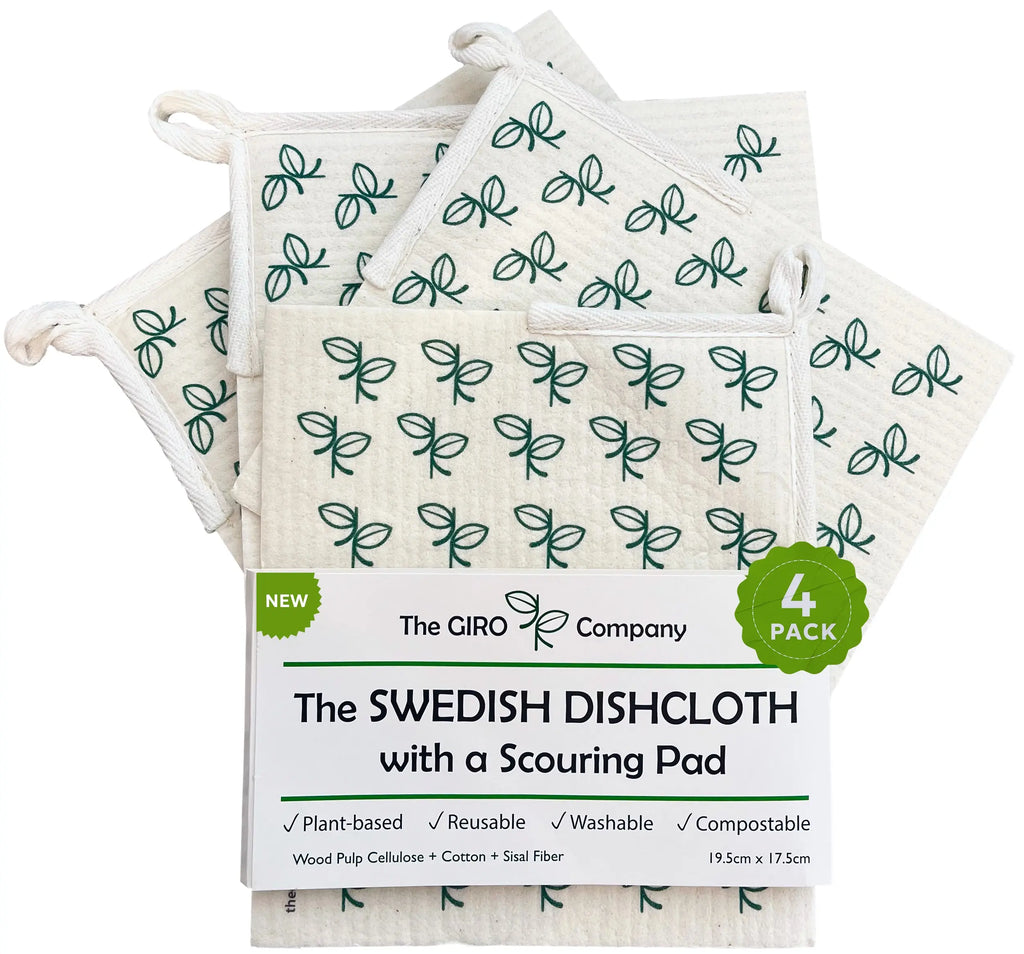
Short answer: most households do well with a small stack, not one forever cloth. Solo kitchens: about 2–3. Couples: 3–4. Families or multi-zone kitchens: 4–8 (or a 4-pack plus a spare set). Giro cloths are 70% cellulose (plant-based wood pulp) and 30% cotton, absorb about 15× their weight, last about 2–3 months with daily use, and include a sisal scouring corner for stuck bits—so one cloth works hard, but a rotation works smarter.
Why one cloth forever falls short
Swedish dishcloths dry fast when hung open by the loop. That is a big upgrade over a sink sponge that stays wet. Still, if the only cloth you own is always damp from lunch dishes when dinner prep starts, it never gets a full dry cycle. A second (and third) cloth lets one hang while another works.
Rotation also separates jobs. A cloth that just wiped raw chicken juice should not be the same one wiping the breakfast table a minute later. A small stack makes that separation easy without buying disposable paper for every zone.
Quick sizing guide: solo, couple, family
- Solo / tiny kitchen: 2–3 cloths. One on the counter, one hanging to dry, one clean spare in the drawer. Enough for dishes plus a counter wipe without stress.
- Couple / shared kitchen: 3–4 cloths. Covers overlapping meal times, a bathroom spill run, and laundry-day lag if you wash cloths with towels.
- Family / busy cook: 4–8 cloths. Think in zones (see below) and keep at least two drying while two work. A 4-pack is the usual starting point; an 8- or 16-pack makes sense if you cook daily or host often.
Over a cloth’s life it can replace up to about 15 paper towel rolls. A stack multiplies that savings because you are less tempted to “just grab a sheet” when the only cloth is wet or in the wash.
Kitchen zones beat one cloth for everything
Assign cloths by zone so you stop cross-contaminating and stop hunting for a dry one:
- Dishes / sink: soft face for plates and nonstick; sisal scouring corner for stuck bits on stainless or cast iron with light pressure
- Counters / table: a dedicated wipe cloth kept relatively clean
- Stove / spills: the workhorse that can take grease and a hang-dry after
- Extras: fridge shelves, microwave, bathroom sink—optional once the kitchen set is solid
You do not need a different SKU for each zone. Same Giro cloth, different hang hooks or drawer spots. Color-coding with a clip or hanging location is enough for most homes.
When to rotate a fresh cloth
- After heavy grease or raw protein jobs — rinse, hang the used one, grab a dry spare
- When it feels slimy or smells even after rinsing — that is a wash signal, not a paper-towel emergency (see why Swedish dishcloths smell)
- Every evening in busy kitchens — start tomorrow with a dry cloth while overnight hang-dry finishes the day’s set
- After dishwasher or machine wash — pull from the top rack, hang open; do not leave them crumpled
A stiff dry cloth is normal after hang-drying; soften it under the tap before the next wipe. Rotation is what keeps the set sanitary and pleasant to use day after day.
Care that makes a small stack last
Good care stretches each cloth toward that 2–3 month daily-use window:
- Rinse after use, then hang dry by the loop—open, not balled in the sink
- Dishwasher top rack OK for a weekly reset; hang when the cycle ends
- No fabric softener—it coats cellulose and kills absorbency
- Deep clean and wash details: how to wash a Swedish dishcloth
- When thin spots appear, retire the cloth (you can cut it up and add it to a home compost pile) rather than scrubbing with a rag-end (how long Swedish dishcloths last, are Swedish dishcloths compostable)
Compared with a thick sponge that lives wet beside the faucet, a hung Swedish dishcloth is easier to keep in a fresh rotation. More on that swap: Swedish dishcloth vs sponge.
What Giro cloths are made of (locked specs)
- 70% cellulose (plant-based wood pulp) and 30% cotton
- Sisal scouring corner (plant-fiber triangle—not a full-face scrubber)
- Absorbs about 15× its weight
- Replaces up to 15 paper towel rolls over its life
- Typical life about 2–3 months with daily kitchen use
- Plastic-free and made from biodegradable plant fibers
- Care: rinse, hang dry by the loop, dishwasher top rack OK, no fabric softener
Pack math: starting sets that actually stick
- Try-it set: one 4-pack for a solo or couple kitchen—covers dishes, counters, and a spare
- Household set: 8 cloths so laundry day never leaves you with zero dry options
- Stock-up set: 16 for families, shared houses, or anyone ditching paper towel rolls for good
Free shipping in the USA on Giro orders. Start with the size that matches your zones, not a single hero cloth you expect to use until it dissolves.
FAQ
Can I run a kitchen on just one Swedish dishcloth?
You can for a weekend trip. For daily cooking, two or three prevent the “always damp” problem and make hang-dry actually work.
How often should I wash the whole stack?
Rinse after each use; do a dishwasher top-rack or machine wash when cloths look dingy, smell, or after raw-meat jobs. Many homes wash the set once or twice a week.
Do I need different cloths for bathroom and kitchen?
Helpful, not mandatory. If you share, wash more often and keep a clearly separate hang spot for the bathroom cloth.
When do I replace instead of wash?
When the sheet thins, tears, or will not rinse clean after a proper wash—usually around 2–3 months of daily use. Retire the worn cloth—you can cut it up and add it to a home compost pile—and rotate a new one from your stack.
Questions about sizing or care?
Email help@thegirocompany.com.
Ready to build a small stack that beats one cloth forever? Swedish Dishcloths with a sisal scouring corner ship free in the USA in 4-pack, 8-pack, and 16-pack sizes.