Guides
How Many Paper Towels Does a Swedish Dishcloth Replace?
September 29, 2026

For a typical kitchen, one Swedish dishcloth replaces somewhere between 5 and 15 rolls of paper towels over its two to three month life. The spread is wide because kitchens differ. Below is the formula, so you can stop trusting packaging claims (ours included) and run your own numbers in one minute.
The formula
Rolls replaced = (sheets you would have used per day x days the cloth lasts) / sheets per roll
Three inputs. All of them are things you already know or can count this week.
- 1. Sheets per day. Count the paper towels your household uses for jobs a cloth could do: wiping counters, drying hands, mopping spills, wiping the stove. Leave out the jobs where paper really is better (more on those below).
- 2. Days the cloth lasts. With daily use and regular washing, 60 to 90 days is normal.
- 3. Sheets per roll. It is printed on the pack. Rolls vary a lot, from under 60 big sheets to over 150 small ones.
Three example kitchens
These are worked examples, not survey data. They use a 100 sheet roll and a cloth that lasts 75 days.
| Kitchen | Sheets per day a cloth could handle | Sheets over 75 days | Rolls replaced |
|---|---|---|---|
| Light: one or two people, cook a few nights a week | 6 | 450 | 4.5 |
| Medium: family, cooking most days | 12 | 900 | 9 |
| Heavy: young kids, every spill gets a wad of paper | 20 | 1,500 | 15 |
That last row is where "replaces up to 15 rolls" comes from. It is a real number for a heavy-use home and an optimistic one for a quiet household. "Up to" is doing honest work in that sentence.
What that means in money
Use your own roll price. As an EXAMPLE, at $1.50 a roll:
| Kitchen | Paper towel cost over 75 days | One cloth (from a 16-pack) | Difference |
|---|---|---|---|
| Light | $6.75 | $2.19 | $4.56 |
| Medium | $13.50 | $2.19 | $11.31 |
| Heavy | $22.50 | $2.19 | $20.31 |
Most homes keep two or three cloths in rotation, so multiply both sides accordingly. Washing adds almost nothing because the cloth rides along in a dishwasher or laundry load you were running anyway.
Over a year, the medium kitchen in this example skips roughly 44 rolls. That is also 44 rolls you did not carry home, store, or put in the trash.

Where paper towels still win
A cloth is the wrong tool for a few jobs, and pretending otherwise is how people give up on reusables.
- Raw meat juices. Use paper, bin it, wash your hands.
- Pet accidents and anything you do not want in your washing machine.
- Draining bacon or fried food. Grease is hard to wash out of cellulose.
- Oil or grease you plan to throw away.
Keep one roll for those. If a roll used to last you a week and now lasts two months, the swap worked.
Why a cloth holds so much more than a sheet
A paper towel sheet is thin by design, so it saturates fast and you reach for another. A cellulose cloth is thicker and sponge-like. It absorbs many times its own weight, and then you squeeze it out and it absorbs again. One cloth handles a spilled glass of water in one or two passes. The same spill eats a fistful of sheets.
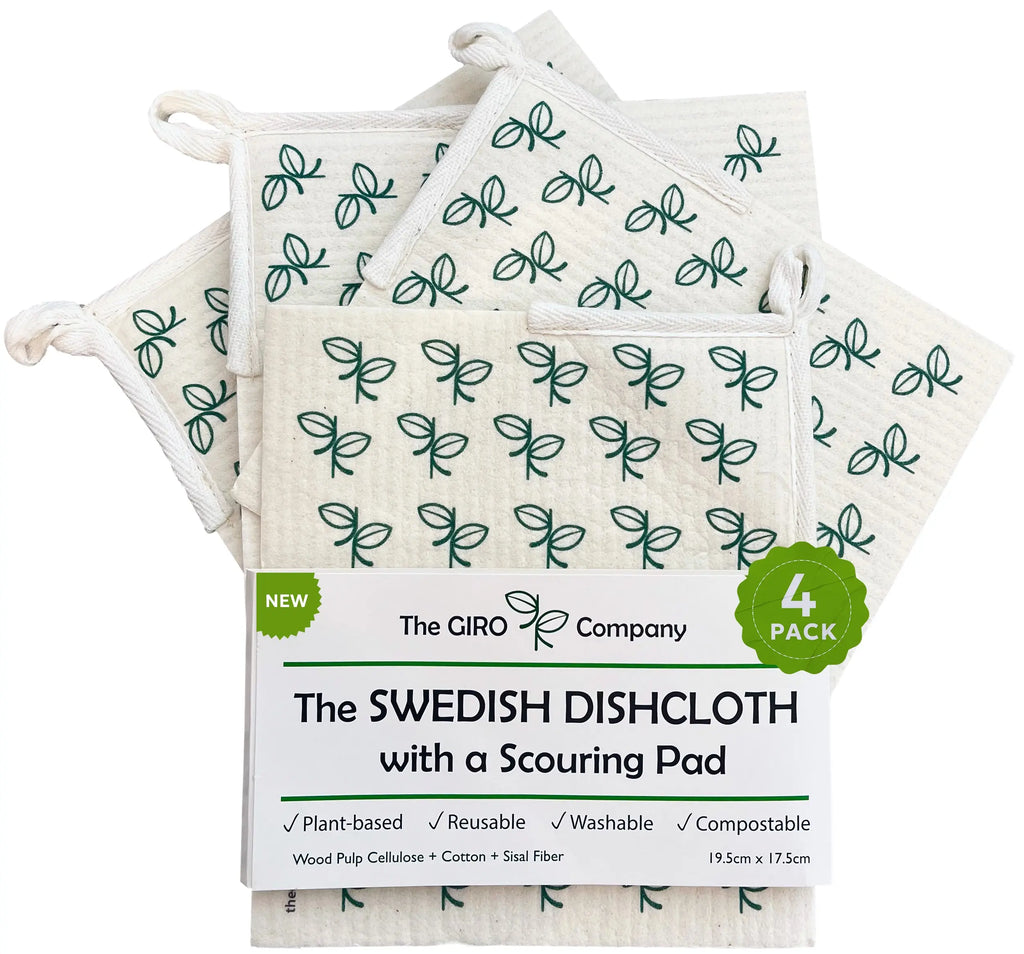
The Giro cloth adds a sisal scouring corner, which removes another paper towel habit: scrubbing at a dried-on spot with a wet sheet until the sheet disintegrates.

FAQ
How many cloths do I need to stop buying paper towels?
Three in rotation covers most kitchens: one in use, one drying, one in the wash. A 4-pack gives you a spare.

Do they really last two to three months?
With daily use, yes, if you rinse after use, let them dry between jobs and wash them weekly. Left wet in the bottom of a sink, nothing lasts.
Is washing them worse for the environment than using paper?
Washing a few small cloths inside loads you already run adds very little water or energy. Making, shipping and landfilling dozens of rolls adds a lot. Exact figures depend on your machine and your towels, so we will not pretend to a precise number.
What do I do with the cloth at the end?
It is 70% cellulose (plant-based wood pulp) and 30% cotton, so it’s made from biodegradable plant fibers. When it’s worn out, you can cut it up and add it to a home compost pile.
Run your numbers, then pick a size: Swedish Dishcloths with Scouring Corner in 4-pack, 8-pack, and 16-pack sizes, free US shipping.