Guides
Do Swedish Dishcloths Scratch Nonstick Pans?
September 23, 2026

Cookware scratches usually come from metal scrubbers, abrasive powders, or hard plastic tools—not from a soft Swedish dishcloth. The question is really about which side of the cloth you use, and on which pan.
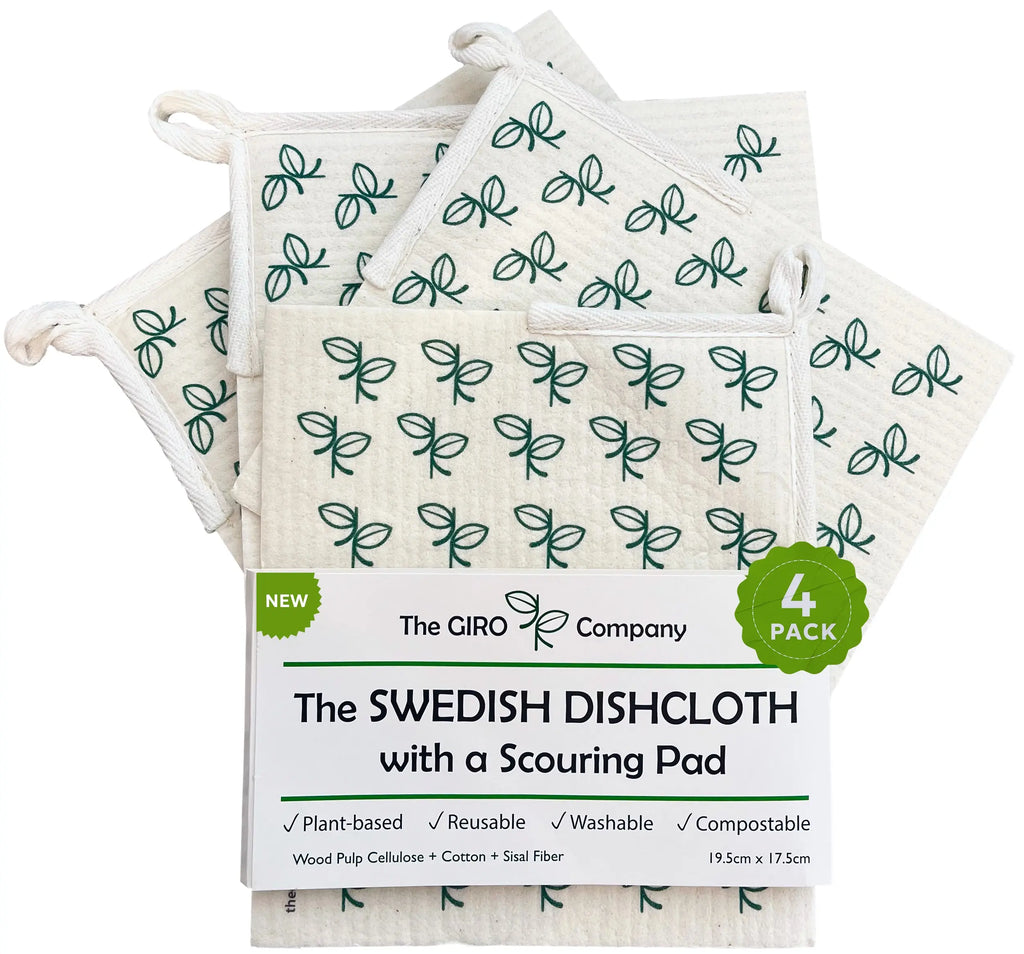
Short answer: the soft cellulose/cotton face of a Giro Swedish dishcloth is safe for nonstick, stainless, ceramic, and glass. Use the sisal scouring corner (not a full-face scrubber) for stuck bits on stainless or cast iron with light pressure. Skip the corner on delicate nonstick coatings. Giro cloths are 70% cellulose (plant-based wood pulp) and 30% cotton, absorb about 15× their weight, and typically last about 2–3 months with daily use.
What actually scratches nonstick pans
Nonstick coatings fail from abrasion and heat abuse more than from soap and water. The usual scratch culprits:
- Steel wool and metal scrubbers that dig into the coating
- Harsh powdered cleansers with grit that acts like sandpaper
- Metal utensils scraping while you cook, then again while you scrub
- Stacking pans without a protector so bases grind the coating
A thin Swedish dishcloth is built to wipe, absorb, and rinse—not to grind. The soft face feels closer to a dense paper towel than to a coarse full-sheet scrubber. That is why it belongs in the same drawer as your everyday dish soap, not next to the steel wool.
Soft face vs sisal scouring corner
Giro cloths have two working zones on purpose:
- Soft face (70% cellulose / 30% cotton): daily washing of nonstick, ceramic, stainless, glassware, and counters. It lifts grease and food film without a grit layer.
- Sisal scouring corner: a small plant-fiber triangle for stuck food. It is a corner, not a full-face scrubber. Use it only where you would carefully use a soft scrubber—never as an excuse to grind on a damaged nonstick coating.
That corner is why people ask about scratches. Sisal is coarser than the cellulose-cotton face, so treat it like a focused spot tool. On nonstick: stick to the soft face. On stainless or cast iron with baked-on bits: light pressure with the corner, then rinse.
How to wash nonstick pans with a Swedish dishcloth
- Let the pan cool enough that you can touch the handle comfortably. Hot nonstick plus cold water can stress the coating.
- Rinse loose crumbs under warm water.
- Add a drop of dish soap to the soft face of the cloth (or to the pan).
- Wipe in gentle circles with the soft cellulose/cotton side. Flip the cloth as it loads up.
- For a stubborn spot on nonstick: soak the pan a few minutes in warm soapy water, then wipe again with the soft face. Do not dig with the sisal corner.
- Rinse the pan and the cloth, then hang the cloth open by the loop so it dries fully.
If you need a deeper care routine for the cloth itself—vinegar soak, dishwasher top rack, no fabric softener—see how to wash a Swedish dishcloth. A cloth left damp will smell; hang dry fixes most of that (why Swedish dishcloths smell).
Stainless, cast iron, ceramic, and glass
Stainless steel: soft face for daily shine; sisal scouring corner for stuck rice or egg with light pressure. Rinse grit away so you are not rubbing dried food as an abrasive.
Cast iron: after cooking, wipe with the soft face while the pan is still warm (not screaming hot). Use the corner sparingly for stuck bits, then dry and oil as you normally would. Avoid soaking cast iron for long stretches.
Ceramic cookware: prefer the soft face. Ceramic coatings vary by brand; when in doubt, skip the corner and soak instead.
Glass lids and bakeware: soft face is ideal. The cloth absorbs about 15× its weight, so it picks up rinse water instead of smearing it around.
Compared with a thick kitchen sponge that stays wet in the sink, a Swedish dishcloth dries faster when hung and is less likely to grind grit into a pan. More on that swap: Swedish dishcloth vs sponge.
Care habits that keep pans and cloths happy
- Rinse the cloth after dishes so food particles do not become tomorrow’s scratch grit
- Hang dry by the loop—open, not balled up in the sink
- Dishwasher top rack OK for a reset; pull it out and hang when the cycle ends
- No fabric softener—it coats cellulose so the cloth stops absorbing cleanly
- Replace about every 2–3 months with daily use, or sooner if thin spots appear
A stiff dry cloth is normal after hanging; soften it under the tap before the next job (why Swedish dishcloths go stiff). Lifespan details: how long Swedish dishcloths last.
What Giro cloths are made of (locked specs)
Accurate product facts matter when you are trusting a cloth on expensive pans:
- 70% cellulose (plant-based wood pulp) and 30% cotton
- Sisal scouring corner (plant fiber triangle—not a full-face scrubber)
- Absorbs about 15× its weight
- Replaces up to 15 paper towel rolls over its life
- Typical life about 2–3 months with daily kitchen use
- Plastic-free and made from biodegradable plant fibers
- Care: rinse, hang dry by the loop, dishwasher top rack OK, no fabric softener
When a cloth is worn out, you can cut it up and add it to a home compost pile instead of sending another plastic scrubber to the landfill. See are Swedish dishcloths compostable.
Quick scratch-safety checklist
- Nonstick / ceramic: soft face only; soak stuck food; skip the sisal corner
- Stainless: soft face daily; light corner work for stuck bits
- Cast iron: soft wipe; corner sparingly; dry and oil after
- Never: steel wool on nonstick; powdered grit cleansers on coated pans
- Cloth care: rinse → hang dry → no softener
- Questions: help@thegirocompany.com
FAQ
Will the sisal scouring corner ruin my nonstick pan?
Use the soft face on nonstick. Reserve the sisal scouring corner for stainless or cast iron stuck-ons with light pressure. If a nonstick pan is already peeling, no cloth will fix the coating—retire the pan.
Are Swedish dishcloths abrasive like a sponge’s green side?
No. The main face is cellulose and cotton. Only the small sisal corner is coarser, and it covers a corner—not the whole sheet.
Can I scrub burnt sugar off stainless with the corner?
Yes, gently. Soften burnt sugar with warm water first so you are not grinding hard caramel as grit. Rinse the cloth often.
Do I need a separate sponge for pans?
Most kitchens can drop the wet sponge for everyday pans and counters. Keep a dedicated tool only if you love it for cast-iron restoration—not for daily nonstick.
Ready for a scratch-sensible swap? Swedish Dishcloths with a sisal scouring corner ship free in the USA in 4-pack, 8-pack, and 16-pack sizes. Questions anytime: help@thegirocompany.com.