Guides
Can You Put Swedish Dishcloths in the Dishwasher?
September 25, 2026

Yes—you can put Swedish dishcloths in the dishwasher. Used the right way, a dishwasher cycle is one of the easiest weekly resets for a cloth that sees greasy pans, counters, and sink duty every day.
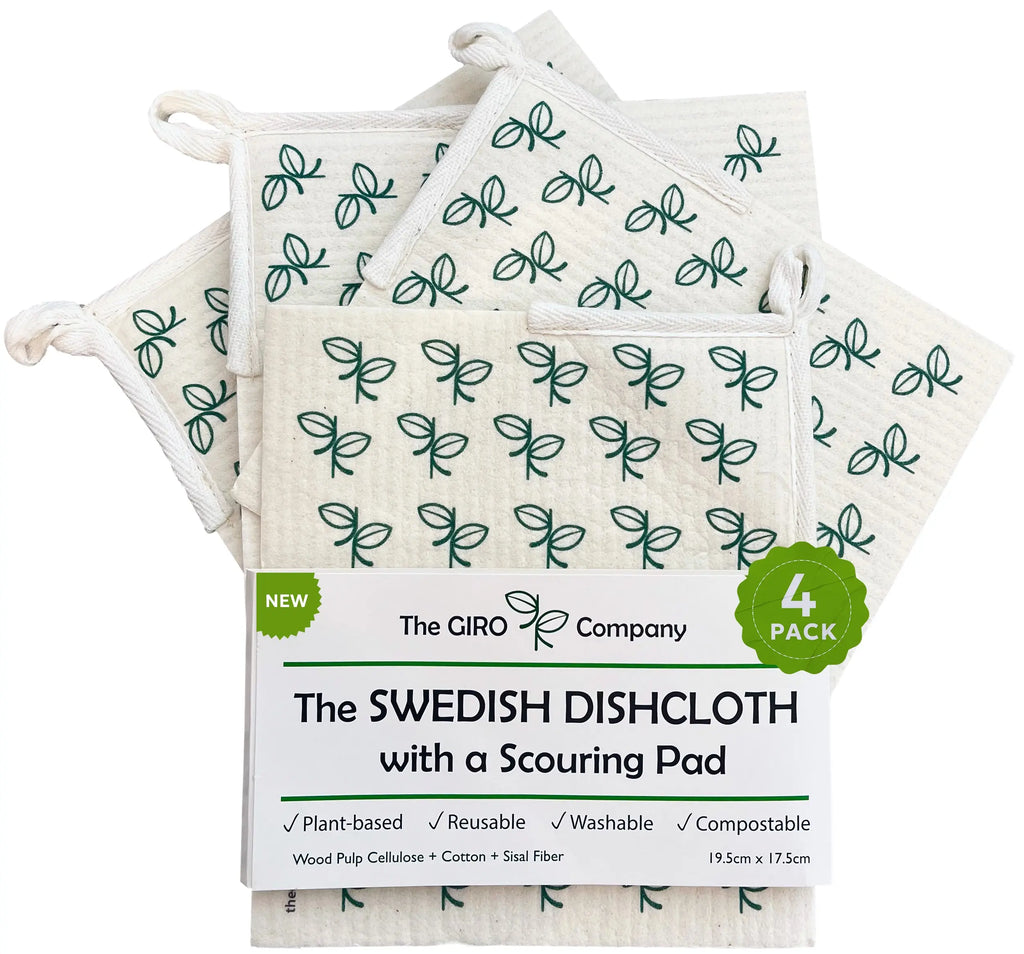
Short answer: place Giro Swedish dishcloths on the dishwasher top rack, run a normal cycle, then hang dry by the loop when the door opens. Do not use fabric softener (including softener pods or rinse aids meant for fabrics). Giro cloths are 70% cellulose (plant-based wood pulp) and 30% cotton, absorb about 15× their weight, last about 2–3 months with daily use, and include a sisal scouring corner for stuck bits—so a clean, dry cloth stays pleasant to grab.
Why the dishwasher works for Swedish dishcloths
Swedish dishcloths are plant-fiber sheets, not plastic sponges. Hot water and detergent loosen food oils and kitchen residue that a quick sink rinse can miss. The open cellulose weave rinses cleaner than a thick foam sponge that stays soggy beside the faucet.
That does not mean every load is mandatory. Rinse after use and hang open for day-to-day freshness. Save the dishwasher for when cloths look dingy, feel slimy, smell off after rinsing, or after raw-protein jobs. More on odor causes: why Swedish dishcloths smell.
How to load them (top rack, open, not jammed)
- Rinse first under the tap so large crumbs and grease do not bake onto neighboring dishes.
- Top rack only. Keep cloths away from the heating element and from sharp knives that can snag the sheet or the hanging loop.
- Lay them flat or drape over a rack tine so water can reach both faces. Do not wad them into a corner or trap them under a heavy bowl.
- Skip fabric softener. Softener coats cellulose and kills absorbency—the opposite of what you want in a wipe cloth.
- When the cycle ends, hang dry by the loop immediately. Do not leave cloths crumpled in a closed machine overnight.
A stiff cloth after drying is normal. Soften it under the tap before the next wipe. Full wash options (machine wash, hand wash, refresh tips): how to wash a Swedish dishcloth.
Top rack vs bottom rack
The top rack is the safe default. It is farther from the hottest heating zone in many machines and keeps the cloth from sitting in pooled rinse water at the bottom. If your dishwasher has a sanitize or high-heat dry setting, the cloth can still go on the top rack—just hang it open afterward so residual moisture does not linger in folds.
Avoid stuffing cloths into the utensil basket where they stay bunched. Airflow matters as much as detergent.
What the dishwasher will not fix
Dishwashing resets oils and everyday kitchen soil. It will not permanently repair a cloth that is already thinning, tearing, or permanently stained after months of hard use. Typical life with daily kitchen work is about 2–3 months. When the sheet wears out, retire it (you can cut it up and add it to a home compost pile) rather than forcing one rag forever—see how long Swedish dishcloths last and are Swedish dishcloths compostable.
If smell returns within a day even after a full wash, the usual culprit is drying: the cloth sat wet in the sink or in a closed machine. Hang open. Compare that wet-sponge habit to a hung Swedish cloth here: Swedish dishcloth vs sponge.
Daily care between dishwasher runs
- Rinse after each use, squeeze gently, hang by the loop with the sheet open
- Use the soft face for plates and nonstick; reserve the sisal scouring corner for stuck bits on stainless or cast iron with light pressure
- Keep a small rotation so one cloth can dry while another works—sizing tips: how many Swedish dishcloths do you need
- Weekly (or as needed): dishwasher top rack, then hang dry
Over its life, one Giro cloth can replace up to about 15 paper towel rolls. Keeping the set dishwasher-clean and hang-dried is what makes that swap stick instead of reaching for a disposable sheet when the only cloth feels funky.
What Giro cloths are made of (locked specs)
- 70% cellulose (plant-based wood pulp) and 30% cotton
- Sisal scouring corner (plant-fiber triangle—not a full-face scrubber)
- Absorbs about 15× its weight
- Replaces up to 15 paper towel rolls over its life
- Typical life about 2–3 months with daily kitchen use
- Plastic-free and made from biodegradable plant fibers
- Care: rinse, hang dry by the loop, dishwasher top rack OK, no fabric softener
FAQ
Can Swedish dishcloths go in the dishwasher every day?
They can, but most kitchens only need a weekly (or as-needed) cycle. Daily rinse + hang dry covers routine use.
Will the heat shrink or melt them?
Giro cloths are plant fiber, not plastic foam. Use the top rack and hang dry after. Avoid melting concerns that apply to synthetic scrubbers.
Can I use dishwasher pods that include rinse aid?
Standard detergent is fine. Skip anything marketed as fabric softener. If a combo pod is heavy on softener chemistry, choose a basic detergent instead.
Should I put them in with a full load of dishes?
Yes—just give them space on the top rack so spray arms can reach both sides.
What if the cloth still smells after dishwashing?
Hang it fully open. If odor persists after a second wash and thorough dry, replace the worn cloth; you can cut up the old one and add it to a home compost pile.
Questions about care?
Email help@thegirocompany.com.
Ready for cloths that rinse clean on the top rack and hang dry without the sponge funk? Swedish Dishcloths with a sisal scouring corner ship free in the USA in 4-pack, 8-pack, and 16-pack sizes.