Guides
Can You Microwave a Swedish Dishcloth? (Safe Sanitizing Tips)
September 30, 2026

Yes—with care. A short microwave burst on a damp Swedish dishcloth is a popular kitchen tip for a quick refresh. It is not magic, and it is not Giro’s preferred deep clean. Think of it as an optional shortcut, not a kill-all sanitizing guarantee.
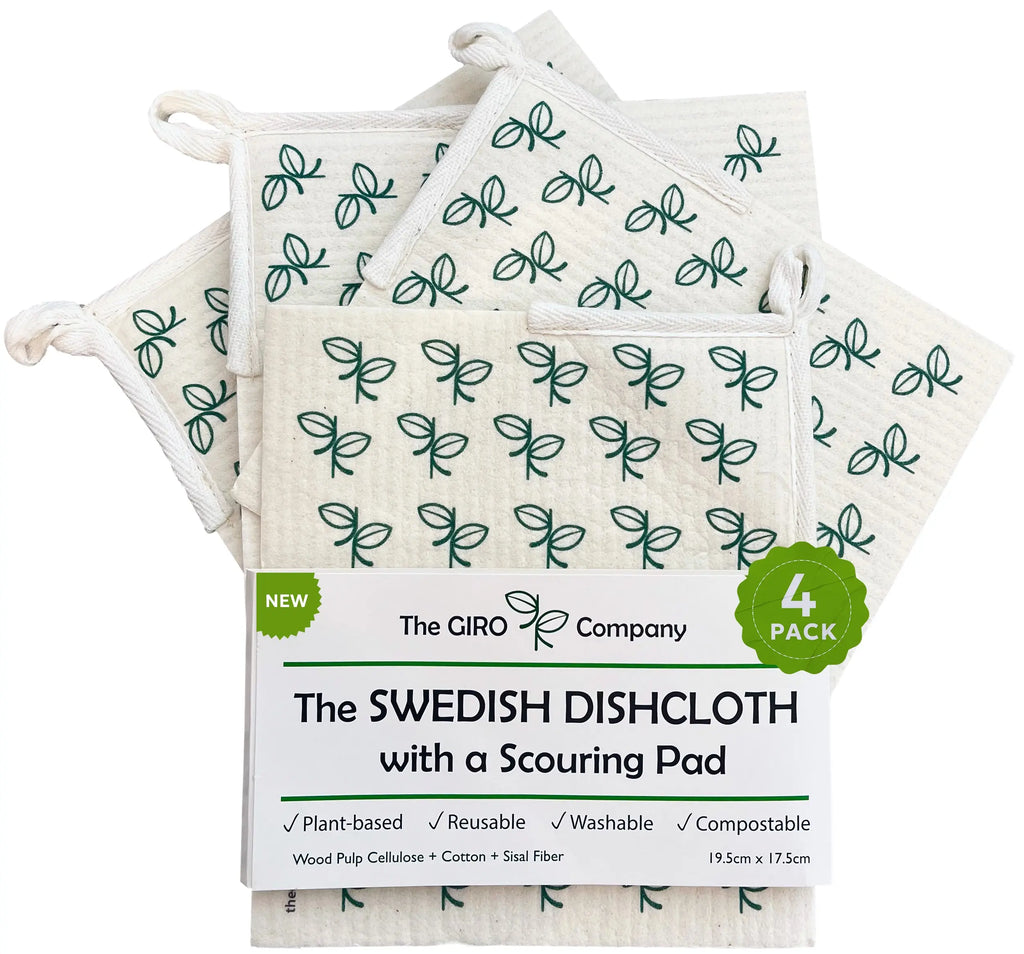
Short answer: only microwave a cloth that is damp (never bone-dry), keep the time short, never use metal, and handle it carefully when it comes out hot. For a reliable reset, put Giro cloths on the dishwasher top rack or run them through the washing machine, then hang dry—no fabric softener. Giro cloths are 70% cellulose (plant-based wood pulp) and 30% cotton, absorb about 15× their weight, last about 2–3 months with daily use, and include a sisal scouring corner.
Why people microwave Swedish dishcloths
Sponges and dishcloths pick up food bits and odors between washes. Online tips often suggest a damp microwave zap to heat the cloth quickly. Steam and heat can help freshen a cloth that still feels mostly clean but a little “off”—similar to how a hot rinse feels more thorough than a cold one.
That is different from claiming the microwave wipes out every microbe or cures a truly sour cloth. If a cloth smells strongly, looks dingy, or has sat wet in a heap, skip the shortcut and do a real wash. More on odor: why Swedish dishcloths smell.
How to microwave a Swedish dishcloth safely
If you want to try the microwave tip, treat it like heating a damp towel—not like sterilizing lab gear.
- Rinse first. Knock off crumbs and grease under the tap. You want a clean-ish, damp sheet—not a cloth loaded with food scrap.
- Keep it damp. Squeeze so it is wet through but not dripping a puddle. A dry cellulose cloth in a microwave is a fire risk; moisture is what makes the tip work.
- Place it alone. Put the cloth on a microwave-safe plate or directly on the turntable. No metal rings, no foil, no utensils.
- Cover if it helps. A microwave-safe cover or plate on top can reduce spatters and keep steam closer to the cloth. Leave a small vent so steam can escape.
- Use a short burst. Start with about 30–60 seconds on high for a single damp cloth. Stop if you smell scorching. Do not walk away for a long cook cycle.
- Handle with care. The cloth (and plate) can be very hot. Use tongs or wait a moment, then hang the cloth open to dry.
This is a convenience tip, not a substitute for detergent and a full wash. Full care rundown: how to wash a Swedish dishcloth.
What not to do
- Never microwave a dry cloth. Dry cellulose and cotton can overheat and scorch.
- Never include metal. No metal scrubbers, foil bits, or anything conductive near the cloth.
- Do not run long cycles. More time is not “more sanitary”—it is more heat stress on plant fibers and a higher burn risk.
- Do not expect absolute kill-all results. Microwaving does not guarantee every odor or soil is gone. Stubborn smell after a zap means wash or replace.
- Do not leave a hot, wet wad in the microwave. Pull it out and hang dry so moisture does not sit in folds.
Giro’s preferred deep clean (better than microwaving)
When you want a real reset—weekly, after raw food prep, or when the cloth looks tired—use water plus detergent, not only heat:
- Dishwasher: top rack only, away from the heating element. Details: can you put Swedish dishcloths in the dishwasher.
- Washing machine: with similar colors, regular detergent, no fabric softener (softener coats fibers and kills absorbency).
- Hang dry by the loop or draped open over a faucet. Skip the heat dryer—see dryer guidance.

Microwaving can be a bridge between washes. Detergent in a dishwasher or laundry cycle is still the more thorough everyday reset for a reusable cloth that replaces up to about 15 paper towel rolls over its life.
After any clean: hang dry open
Whether you rinsed, microwaved, washed, or dishwasher-cleaned, finishing matters. A thin Swedish dishcloth dries fast when it hangs open. A crumpled ball in the sink stays wet and invites odor.
- Squeeze gently—do not twist the hanging loop or the sisal scouring corner hard
- Hang by the loop on a cabinet knob, or drape over the faucet so both faces get air
- Wait until dry to the touch before stacking or storing
- A stiff dry cloth is normal; a quick rinse softens it for the next wipe

When to skip the microwave and just replace
Typical Giro life is about 2–3 months of daily kitchen use. Retire a cloth when it thins, tears, or stays smelly after a proper wash. Optional end-of-life tip: when worn out, cut it up and add the pieces to a home compost pile if that fits how you compost at home.
Rotate two or three cloths so one is always dry while another works. That habit does more for freshness than any single microwave zap.

What Giro cloths are made of (locked specs)
- 70% cellulose (plant-based wood pulp) and 30% cotton
- Sisal scouring corner (plant-fiber triangle—not a full-face scrubber pad)
- About 8×7 in; absorbs about 15× its weight
- Replaces up to 15 paper towel rolls over its life
- Typical life about 2–3 months with daily kitchen use
- Plastic-free and made from biodegradable plant fibers
- Care: rinse, hang dry, dishwasher top rack OK, machine wash OK, no fabric softener; microwave only as a short damp optional tip
FAQ
Can you microwave a Swedish dishcloth to sanitize it?
You can use a short burst on a damp cloth as a quick refresh tip. Do not treat it as a proven kill-all sanitizing method. Prefer dishwasher top rack or machine wash for a deeper clean.
How long should I microwave it?
About 30–60 seconds on high for one damp cloth is a common starting point. Stop early if anything smells scorched. Never run a long unattended cycle.
Does the cloth need to be wet?
Yes—damp through, not dripping, and never bone-dry. Moisture is essential for this tip and for avoiding scorch risk.
Is the dishwasher better than the microwave?
For a thorough reset, yes. Detergent plus spray on the top rack beats a heat-only shortcut for most kitchens.
Will microwaving ruin the sisal scouring corner?
Short damp bursts are usually fine. Overheating, metal nearby, or dry heating is what you want to avoid. Hang dry open afterward so the corner does not stay soggy.
What if it still smells after microwaving?
Wash it properly (dishwasher or laundry, no softener) and hang dry fully open. Persistent odor after that usually means it is time for a new cloth. See smell troubleshooting.
Questions about care?
Email help@thegirocompany.com. We ship from San Mateo.
Ready for cloths that rinse fast, wash easy, and skip the paper-towel pile? Swedish Dishcloths with a sisal scouring corner ship free in the USA in a 4-pack ($11.96), an 8-pack ($19.98), and a 16-pack ($34.96).