Guides
Can You Bleach a Swedish Dishcloth? (Safe Dilution Tips)
October 1, 2026

Yes—carefully, and only as an occasional deep reset. A light diluted bleach soak can freshen a stubborn Swedish dishcloth when rinse-and-wash alone is not enough. It is not an everyday habit, and it is not a license to pour straight bleach on the cloth.
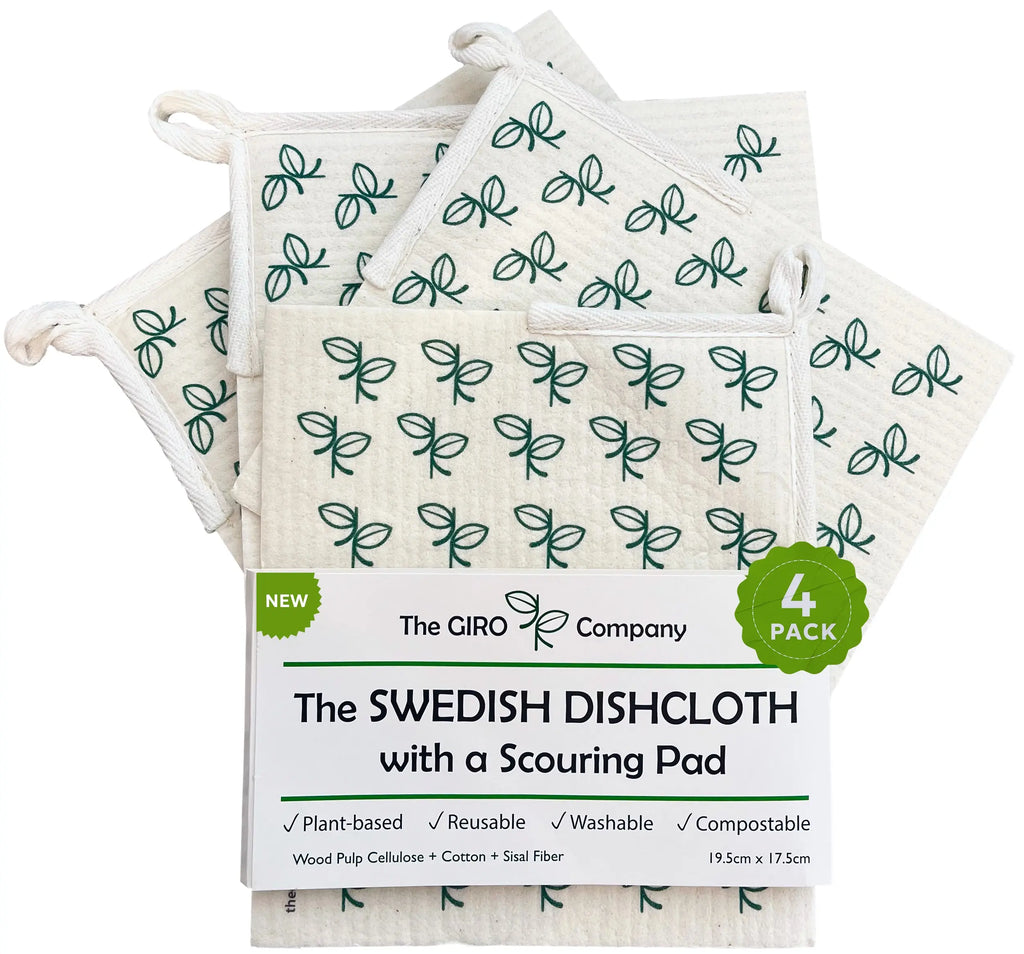
Short answer: dilute household bleach in water, soak briefly, rinse thoroughly, then hang dry. Skip fabric softener forever. For routine care, Giro still prefers the dishwasher top rack or a regular machine wash. Giro cloths are 70% cellulose (plant-based wood pulp) and 30% cotton, absorb about 15× their weight, last about 2–3 months with daily use, and include a sisal scouring corner.
When bleach makes sense (and when it does not)
Bleach is a backup tool. Reach for it when a cloth still looks dingy or smells “off” after a normal wash—not after every dinner. Daily freshness comes from rinsing, hanging open to dry, and rotating a couple of cloths so one is never stuck wet in a heap.
Skip bleach if the cloth is already thinning, tearing, or near the end of its life. At that point, replace it. Typical Giro life is about 2–3 months of kitchen use—one cloth that replaces up to about 15 paper towel rolls over that span. Odor troubleshooting without bleach: why Swedish dishcloths smell.
How to bleach a Swedish dishcloth safely
Treat this like a short laundry soak, not a chemistry experiment.
- Rinse first. Knock off crumbs and grease under the tap so you are bleaching a cloth, not a food scrap collection.
- Dilute. Mix about 1 tablespoon of regular household chlorine bleach in 1 quart (4 cups) of cool water—or follow the dilution on your bleach label for laundry/soaking. Never use undiluted bleach on the cloth.
- Soak briefly. Submerge the cloth for about 5–10 minutes. Agitate once or twice. Longer is not better; plant fibers do not need a marathon bleach bath.
- Rinse thoroughly. Hold the cloth under cool running water until it no longer smells strongly of bleach and the water runs clear. Squeeze gently—do not wring the hanging loop or the sisal scouring corner hard.
- Hang dry open. Drape over the faucet or hang by the loop so both faces get air. No fabric softener in any later wash.

Full everyday care (without bleach): how to wash a Swedish dishcloth.
What not to do
- Never pour undiluted bleach on the cloth or soak it in a strong mix “just to be sure.”
- Never mix bleach with vinegar, ammonia, or other cleaners. That can create harmful fumes. Pick one approach at a time.
- Do not bleach every day. Occasional is the point. Overuse can fade printed patterns faster and stress fibers.
- Do not skip the rinse. Leftover bleach residue is harsh on skin and on the next surface you wipe.
- Do not expect absolute kill-all guarantees. Bleach can help with stubborn dinginess and odor; it is not a lab sterilization claim.
Giro’s preferred routine (bleach is optional)
Most weeks you will not need bleach at all:
- After use: rinse, squeeze, hang open
- Dishwasher: top rack only, away from the heating element — dishwasher guidance
- Washing machine: similar colors, regular detergent, no fabric softener
- Hang dry — skip hot dryer cycles; see dryer guidance

A quick microwave tip is a different shortcut entirely; if you try heat, keep the cloth damp and the time short: can you microwave a Swedish dishcloth.
Will bleach fade the print or hurt the sisal corner?
Occasional diluted soaks are usually fine. Repeated strong bleaching can lighten printed designs over time—that is normal for any printed textile. The sisal scouring corner is plant fiber too; rinse it well and let it dry fully open so it does not stay soggy in a fold.
A stiff dry cloth after hanging is normal cellulose behavior. A quick rinse softens it for the next wipe—no softener needed.

What Giro cloths are made of (locked specs)
- 70% cellulose (plant-based wood pulp) and 30% cotton
- Sisal scouring corner (plant-fiber triangle—not a full-face scrubber pad)
- About 8×7 in; absorbs about 15× its weight
- Replaces up to 15 paper towel rolls over its life
- Typical life about 2–3 months with daily kitchen use
- Plastic-free and made from biodegradable plant fibers
- Care: rinse, hang dry, dishwasher top rack OK, machine wash OK, no fabric softener; diluted bleach only as an occasional option
Optional end-of-life tip: when worn out, cut the cloth up and add the pieces to a home compost pile if that fits how you compost at home.
FAQ
Can you bleach a Swedish dishcloth?
Yes—with diluted household bleach, a short soak, a thorough rinse, and hang dry. Do not use undiluted bleach.
How often should I bleach it?
Only occasionally, when a normal wash did not reset dinginess or odor. Most weeks, rinse + wash + hang dry is enough.
Can I use color-safe bleach or oxygen bleach?
Oxygen-based (non-chlorine) boosters are usually gentler on prints. If you use chlorine bleach, stick to a light dilution and rinse well.
Can I mix bleach and vinegar on the cloth?
No. Never combine bleach with vinegar or ammonia. Choose one cleaner at a time and rinse between different approaches.
Is the dishwasher better than bleaching?
For routine resets, yes. Detergent on the top rack is the everyday deep clean; bleach is the occasional stubborn-cloth backup.
Questions about care?
Email help@thegirocompany.com. We ship from San Mateo.
Ready for cloths that rinse fast, wash easy, and skip the paper-towel pile? Swedish Dishcloths with a sisal scouring corner ship free in the USA in 4 packs ($11.96), 8 packs ($19.98), and 16 packs ($34.96).