Guides
Are Swedish Dishcloths Compostable? What Happens at End of Life
September 18, 2026

If you switched from paper towels to a reusable Swedish dishcloth, the next question is usually about the finish line: when the cloth wears out, can you compost it—or does it still end up in the trash?
Short answer: yes—Giro Swedish dishcloths are plant-based, plastic-free, and 100% biodegradable. When a cloth reaches the end of its useful life (typically about 2–3 months of regular kitchen use), you can compost it rather than landfilling another synthetic scrubber or another stack of used paper towels.
Below is a clear end-of-life guide: what “compostable” means for this product, how the materials break down, how to prep a worn cloth for compost, and how Giro’s specs fit a low-waste kitchen loop.
Quick answer: are Swedish dishcloths compostable?
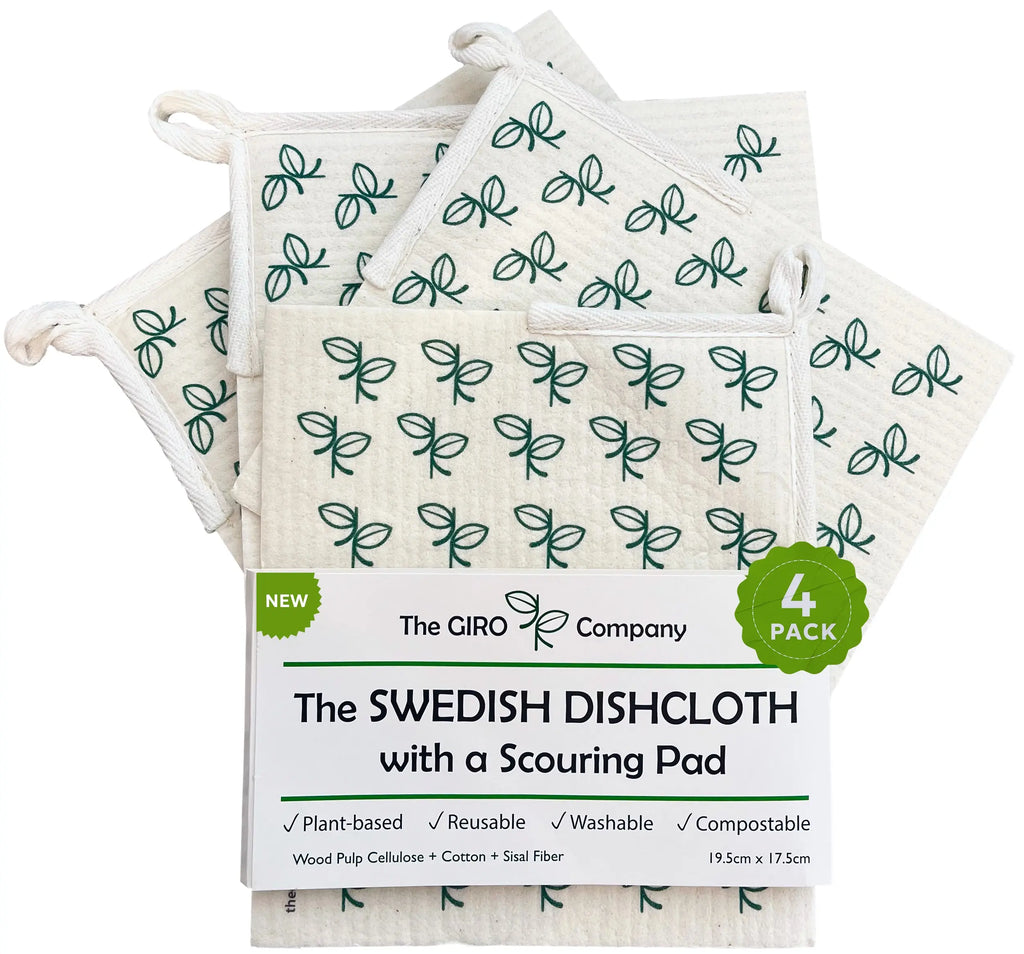
A Giro Swedish dishcloth is made from 70% cotton / 30% FSC wood pulp cellulose—both plant fibers. There is no plastic binder layer, no microfiber polyester, and no foam pad glued on. That plant-fiber construction is why these cloths are marketed as a 100% biodegradable / reusable paper-towel alternative.
In practice: rinse out food residue, tear or cut the worn cloth if your compost system prefers smaller pieces, and add it to a home compost pile or municipal organics program that accepts cotton/cellulose textiles (rules vary by city—check local guidelines).
Giro cloths are about 8\" × 7\", absorb about 15× their weight, replace up to 15 rolls of paper towels per cloth, and include a patent-pending sisal scouring corner (sisal fiber worked into one corner—not a separate scouring pad across the whole face).
What “compostable” means for a kitchen cloth
Compostable means the material can break down into organic matter under composting conditions—heat, moisture, microbes—rather than persisting like plastic film or polyester microfiber.
Swedish dishcloths sit in a different category from:
- Paper towels — often compostable when uncoated, but you may use dozens of sheets for the work one cloth does over months.
- Sponges — many are petroleum foam with a synthetic scrub layer; those usually go to landfill.
- Microfiber — polyester/polyamide filaments; washable and durable, but not plant-compostable at end of life.
With Giro, the everyday loop is reuse first: wipe, rinse, hang dry, wash as needed. Composting is the last step—after about 2–3 months of normal use, when the cloth thins, frays, or stops absorbing well.
Materials: cotton, cellulose, and the sisal corner
Understanding the fiber mix makes end-of-life less mysterious:
- 70% cotton — natural fiber; familiar to home composters who already compost cotton rags or dryer lint (when free of synthetic blends).
- 30% FSC cellulose — wood-pulp cellulose from FSC-sourced forestry; the same plant-fiber family as many paper products, engineered into a thin, highly absorbent sheet.
- Sisal scouring corner — plant-based sisal fiber concentrated in one corner for stuck-on food. It is not a plastic scrubber pad glued across the cloth.
Together, that mix is why Giro can claim 100% biodegradable construction while still delivering kitchen scrubbing on the same hang-dry tool.
How long before end of life?
Expect roughly 2–3 months with regular kitchen use if you rinse after messy jobs, hang the cloth to dry (don’t leave it in a wet ball under the sink), and wash periodically—machine wash or dishwasher top rack. Skip fabric softener; it coats fibers and reduces absorbency.
Signs it’s time to retire a cloth:
- It stays limp and won’t spring back after drying
- Absorbency drops sharply even after a wash
- Thin spots, holes, or heavy staining you no longer want near food prep
Retiring on schedule is part of the sustainability story: one cloth replaced up to 15 paper-towel rolls while it was in rotation—then composting closes the loop instead of starting a landfill pile of synthetic scrubbers.
For a deeper care walkthrough, see our guide on how long Swedish dishcloths last and how to clean Swedish dishcloths.
How to compost a worn Giro Swedish dishcloth
- Rinse thoroughly — remove grease and food bits so your compost stays balanced.
- Optional: cut into strips — smaller pieces break down faster in home bins.
- Add to compost — mix with “browns” (leaves, cardboard) if your pile runs wet.
- Home vs municipal — backyard piles vary; city organics programs differ on textiles. If your program only accepts food scraps, ask whether cotton/cellulose cloths are allowed, or use a home bin.
Do not flush a dishcloth. Composting or trash (if your local rules block textiles) are the options—not the toilet.
Compostable vs biodegradable vs “eco scrubber”
| Claim | What it usually means | Giro Swedish dishcloth |
|---|---|---|
| Biodegradable | Breaks down via natural processes over time | Yes — plant fibers, plastic-free |
| Compostable (practical) | Suitable for compost systems that accept the material | Yes for plant-fiber composting; confirm local organics rules |
| Reusable first | Designed for many uses before disposal | ~2–3 months; up to 15 paper-towel rolls replaced |
| Scrubbing | Often a separate plastic pad | Sisal scouring corner on the same cloth |
| Size / makeup | Varies widely | ~8\" × 7\"; 70% cotton / 30% FSC cellulose; ~15× absorbency |
Marketing words on other “green” scrubbers can hide plastic foam or polyester. Fiber content on the label is the reliable check—and Giro’s locked specs stay plant-based end to end.
How this compares to paper towels and sponges at end of life
Paper towels: Many unused or lightly soiled sheets can compost, but the habit creates constant volume. A Swedish dishcloth front-loads reuse so you compost one thin cloth every few months instead of bagging weekly paper.
Sponges: Classic kitchen sponges are often not compostable. When they smell or tear, they usually become trash. A Giro cloth’s hang-dry, washable cycle plus compostable end-of-life is a different disposal path.
Microfiber: Excellent for glass and dust, but synthetic fibers do not compost like cotton-cellulose. If landfill avoidance at end of life matters to you, plant-fiber Swedish dishcloths are the closer fit for sink-side spills. See Swedish dishcloth vs microfiber for the full side-by-side.
FAQ
Are Swedish dishcloths really compostable?
Giro’s are plant-based (70% cotton / 30% FSC cellulose) and 100% biodegradable. Compost when worn out after rinsing; follow your local organics rules for textiles.
Can I compost the sisal scouring corner too?
Yes—the scouring corner is sisal fiber on the same cloth, not a detachable plastic pad. Compost the whole cloth.
How long do they last before composting?
About 2–3 months with normal kitchen use when you rinse, hang dry, and wash as needed.
What if my city won’t take cloths in the green bin?
Use a home compost pile if you have one, or dispose according to local guidance. You still avoided months of paper-towel waste while the cloth was in use.
Is a Swedish dishcloth the same as a sponge?
No. Sponges are often foam; Swedish dishcloths are thin cotton-cellulose sheets that stiffen slightly as they dry. Giro adds a sisal scouring corner for stuck-on food without turning the whole cloth into a scrub pad.
The bottom line
Yes—Swedish dishcloths like Giro’s are built to be compostable at end of life because they are plant-fiber and plastic-free. Use one cloth for spills, dishes, and light scrubbing for about 2–3 months (replacing up to 15 paper-towel rolls), then rinse and compost when it’s worn out.
Ready for a reusable cloth that doesn’t leave a plastic scrubber behind? Shop Giro Swedish dishcloths with a sisal scouring corner—4, 8, and 16 packs—with free US shipping from San Mateo, California.
Shop Swedish Dishcloths with Scouring Corner
Still deciding? Browse our FAQs or shop Swedish dishcloths.
Questions? Email help@thegirocompany.com.